North Dakota U.S. House candidates differ on federal oversight of AI
Both back local input on data centers, but diverge on the federal government's role

North Dakota’s top Republican and Democratic candidates for the U.S. House generally agree on the need for local control and greater transparency when it comes to developing data centers in North Dakota.
The differences between the candidates are in how deep and far federal regulation should go regarding overall development of artificial intelligence and how those impacts trickle down to North Dakotans.
The main position of Republican Julie Fedorchak, U.S. representative for North Dakota since 2025, is that AI and data center development should continue, with safeguards in place to protect communities, ratepayers and the public.
She argues that local control over data center permitting is key and that the federal government should have oversight of advanced AI development.
Fedorchak, running for a second term in Congress, said AI represents a major technological shift and is potentially more impactful than the Industrial Revolution.
“AI is probably one of the most powerful tools we've ever seen,” she said.
Fedorchak sees significant benefits from AI’s use in agriculture, healthcare and for assisting people with disabilities.
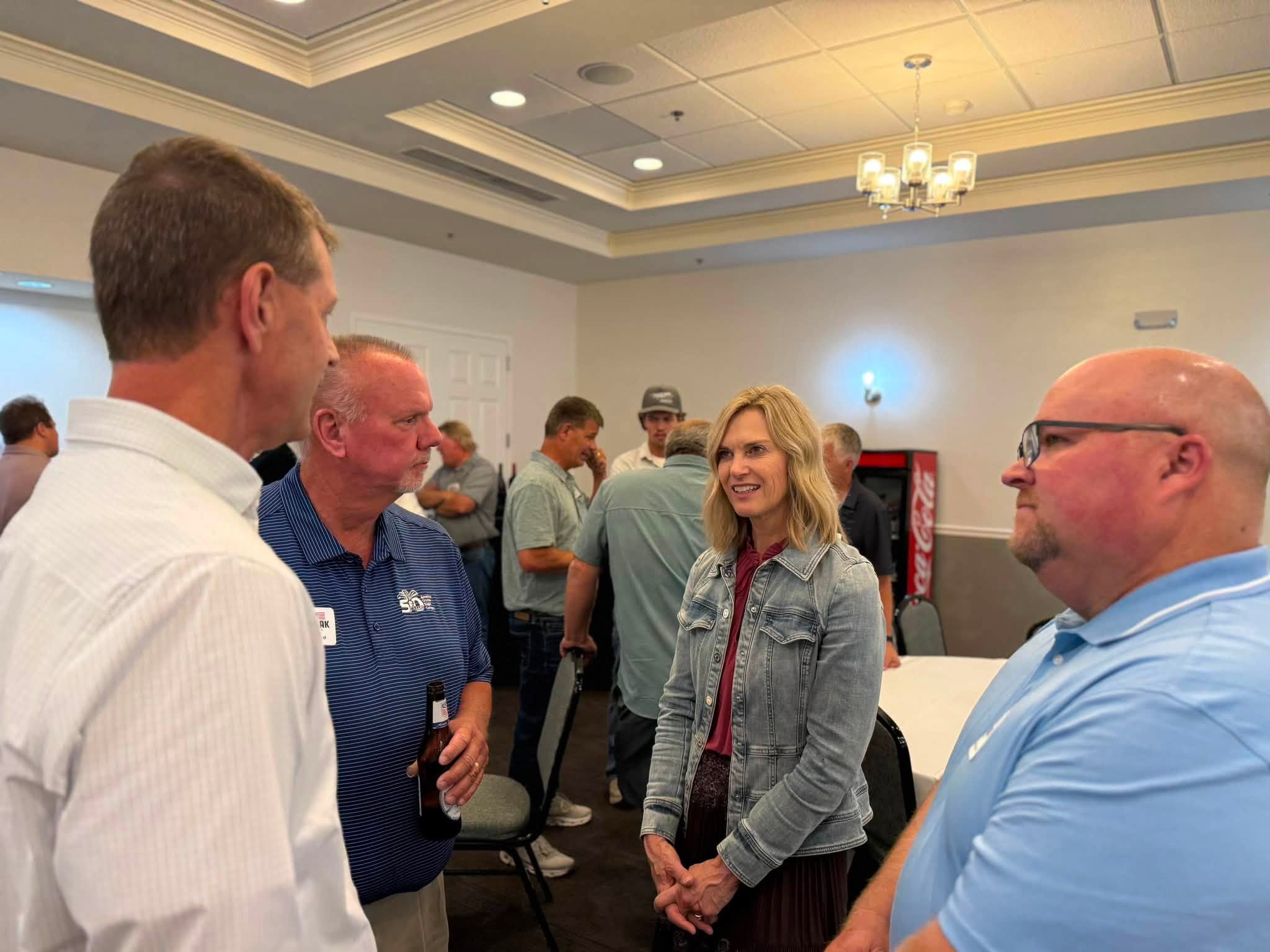
“There's great potential here, but it also comes with risk, and we know that,” Fedorchak said. “We need to develop it in a way that works for our state that protects the quality of life that we all treasure.”
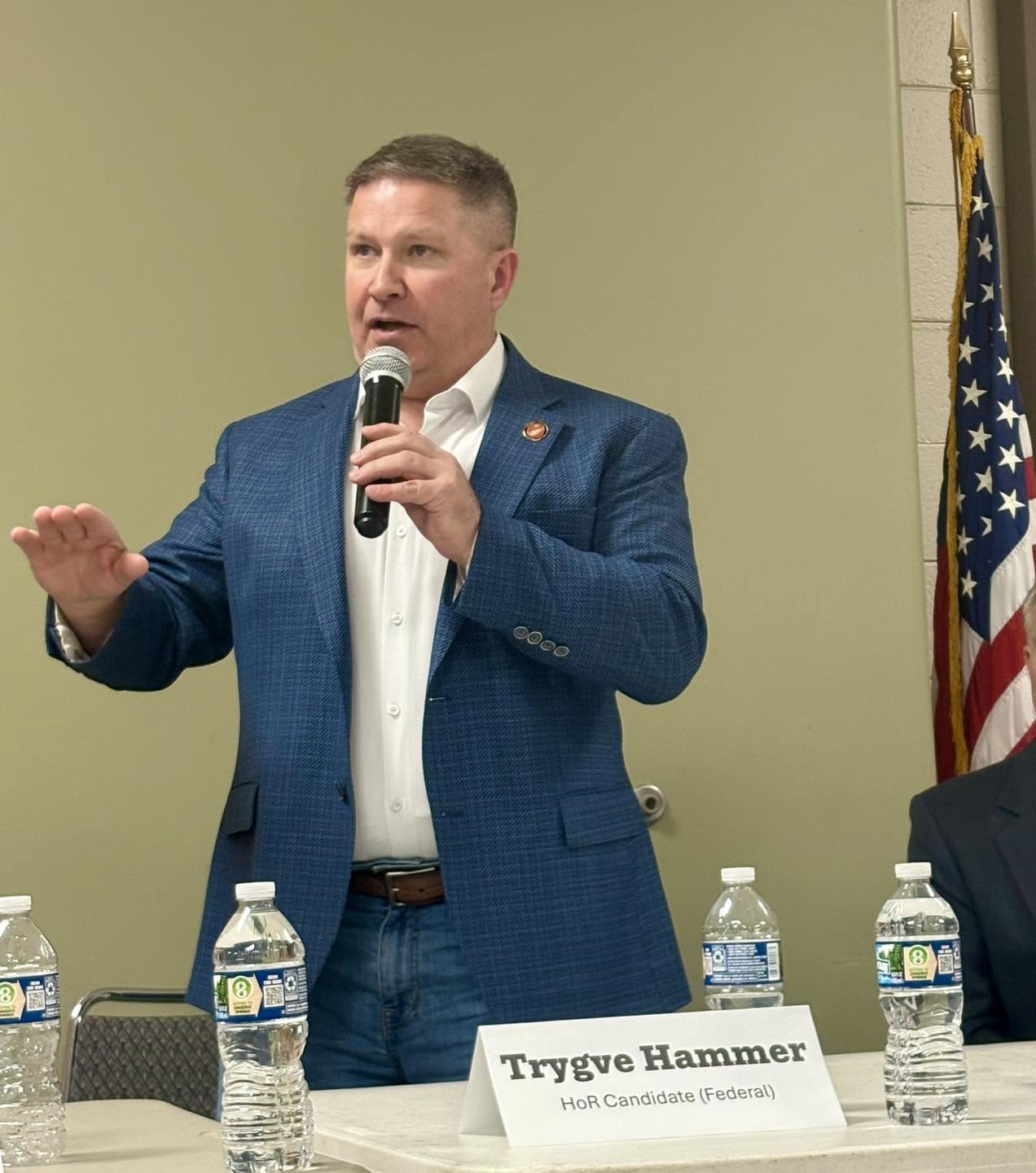
Democratic-NPL U.S. House candidate Trygve Hammer, a Marine Corps veteran who also worked in the Bakken oil fields and taught science, is more skeptical of AI development.
Hammer said AI development needs stronger federal oversight to protect workers, consumers and communities and that Congress should better prepare for unforeseen consequences of AI before they become a crisis.
Hammer, who ran against Fedorchak unsuccessfully in 2024, said the pushback against data centers and AI is largely due to an erosion in public trust.
“I see the whole AI data center thing as being just a symptom or a physical manifestation of a lot of distrust in the system, and the way we've seen corporations use AI and governments use AI hasn't helped with that,” Hammer said.
Hammer said more regulation is needed on AI companies, particularly with concerns about AI agents going rogue, and that Congress should prepare for unintended economic consequences.
Data center development
On data center development, Fedorchak said local governments should control the permitting process and that local leaders need the tools to help them make informed decisions.
“When it comes to permitting, that's a local issue, and those permitting decisions need to be kept at the local level,” she said.
Transparency is essential and she is opposed to nondisclosure agreements between local officials and developers, arguing they undermine public trust and access to information, Fedorchak said.
“I don't believe those should be ever signed,” she said of NDAs. “They threaten the trust that people have that it's a fair process, that it's an open and transparent process, and that they have access to the information they need.”
Fedorchak said communities deserve answers on local impacts of data centers, from water use to electricity prices, traffic, noise, waste disposal, and housing and workforce challenges. Data centers should bear the full electricity costs as well as the costs of the infrastructure to supply it, she said.
Hammer also said data centers should pay their fair share of infrastructure costs and that ordinary consumers shouldn’t have to bear additional costs from new natural gas pipelines or other infrastructure serving data centers.
He also raised concerns about how the buildout of data centers could impact electrical grid stability and said that even if electricity rates are largely handled at the state level, more federal protections and planning are needed.
Fedorchak said that since new data centers are using closed-loop cooling systems in North Dakota, water use shouldn’t be a major issue, but said she supported studying water consumption and whether concerns about depletion are warranted.
That research could either reassure communities or identify problems requiring action, she said.
“It's a legitimate question, and I think it might very well assuage people's concerns that we're depleting our water resources through the use of AI through the data centers,” she said.
Hammer supported independent evaluations of water-use projections and said closed-loop systems still require substantial water over time. He said drought issues increase the stakes for agricultural and livestock production and that potential impacts on drinking water need investigation.
“Right now, we're just kind of taking their word on what's going to happen with the water and how much water consumption there's going to be,” Hammer said. “I think we do need to be concerned about that. We definitely have to study it and know exactly what's going in and what’s going out.”
Federal oversight of advanced AI is needed, Fedorchak said, since state regulation is insufficient to handle technologies that cross boundaries like AI does.
Fedorchak presented the currently circulating Frontier Act as a potential framework that would require third-party oversight of companies developing advanced AI, including plans for safe development.
Fedorchak rejected the idea that there’s a choice between unregulated development of AI and excessive regulation, and said that the stated goal is to establish safeguards without curtailing technological progress.
“I don't see it as an either-or. I don't think you either have unbridled development or you have regulation that's going to curtail the development,” Fedorchak said. “We must stay in the lead in developing this. And if we overregulate, we know what happens. That will send this technology to other places where it can develop more freely. We don't want to do that.”
Fedorchak said she felt the attempts to regulate AI so far had been bipartisan, providing certainty to the industry, and that sweeping changes likely won’t come no matter who’s in control of Congress.
Hammer said there’s a deeper need for regulatory frameworks at the federal level, perhaps even the creation of a specific agency to provide oversight, providing the Federal Aviation Administration as an example.
“If you're building an aircraft, you know there are tests you have to go through before that aircraft is going to fly with passengers,” Hammer said. “I think the same thing should apply to AI.”
Hammer argues that consumer protections have been ignored and should be built into federal AI regulation, specifically mentioning access to personal financial data, personalized wage suppression and algorithmic pricing to individual consumers based on buying habits that he said are unfair and exploitative.
“AI doesn’t really have a moral compass,” Hammer said.
AI leadership
Fedorchak said maintaining U.S. leadership in AI development is a priority and that excessive regulation could push that development to countries with fewer restrictions.
AI development in China remains a concern and supported talks with China, but questioned how much trust could be placed in the commitments of Chinese leaders, she said.
“As it relates to talks with China, I'm all for that, but we always have to keep in mind how much we can trust what we're hearing from (them) and the commitments that China is making,” she said.
“That brings me back to the point about needing to stay in the lead, and so we have to figure out how to provide the power to supply that development and the regulation to responsibly do it here in the U.S.,” she added.
Fedorchak said energy supply is part of the competitive equation, arguing that the U.S. must be able to provide sufficient energy to support AI development.
Hammer questioned the framing of AI development as a race for global domination. Rather than viewing AI as a contest where one country must prevail, international cooperation is essential on shared safeguards to reduce the risks globally, he said.
“I don't really buy into this competition with China and competition with India for who's going to rule AI,” he said. “I think it's going to be everywhere, and you know, right now we're falling behind China on other things, but not yet on AI.”
As AI advances everywhere, the need for high-level agreements increases, he said.
“It’s going to take international agreements to have those guardrails to make sure that we don't do ourselves in, or do our infrastructure in,” he said.
Job fears
Fedorchak acknowledged concerns about AI displacing jobs, and that some jobs will be impacted and others created.
Productivity is generally expected to improve with AI, and with North Dakota’s low unemployment rates, AI could help address staffing challenges, she said.
“On workforce, I think that it'll generally improve people's productivity,” Fedorchak said.
“Workforce challenges are one of the most significant things I hear from employers all over the state, and so hopefully it'll help us address some of those shortages using technology solutions and help our businesses grow and develop even more jobs,” she said.
Hammer said how AI will impact employment long-term remains uncertain, and cited cases where companies laid off workers in anticipation of AI productivity gains only to hire them back again.
Hammer said Congress should start planning for job and economic disruption now, putting into place protections for workers instead of waiting for the full consequences.
“We need to protect working Americans from the economic impacts of AI, and I'm primarily concerned about where these jobs go and what we do,” Hammer said. “Congress needs to be thinking about this now.”
Support Independent Journalism
Your donation to the North Dakota News Cooperative puts our communities first by delivering in-depth reporting on the issues that matter most.
Donate to NDNCThe North Dakota News Cooperative is a nonprofit news organization providing reliable and independent reporting on issues and events that impact the lives of North Dakotans. The organization increases the public’s access to quality journalism and advances news literacy across the state.
Have a story idea? Send tips to michael@newscoopnd.org. Connect with us on X or Facebook.