North Dakotans look for answers as questions on data centers mount
State, local governments play catch-up as development moves faster than rules
North Dakota is attempting to play-catch up to a nationwide data center development boom moving faster than rules or public input can keep pace.
Driven by the rapid expansion of artificial intelligence, the new wave of hyperscale data centers has caused some state officials and communities to question whether they are worth the potential costs versus the benefits.
According to the U.S. Data Center Map, an online tool tracking data center development across the country, North Dakota currently has 12 operational data centers, with six under construction and another 15 planned or proposed.
These projects are exposing gaps between the pace of private development and the ability of local governments to establish policies governing it.
Several counties across the state put temporary moratoriums in place this year, while others are establishing or debating ordinances and moratoriums.
Mark Lyman, an economic development specialist at the Minot Area Chamber EDC, said conversations with communities about big projects - whether they’re coal plants, power plants, iron plants or data centers - are needed. Minot recently established an ordinance related to data centers after public input.
“They’re all going to need that conversation, and that’s okay,” Lyman said. “The more people talk about it, the more people understand it, the better buy-in we can get.”
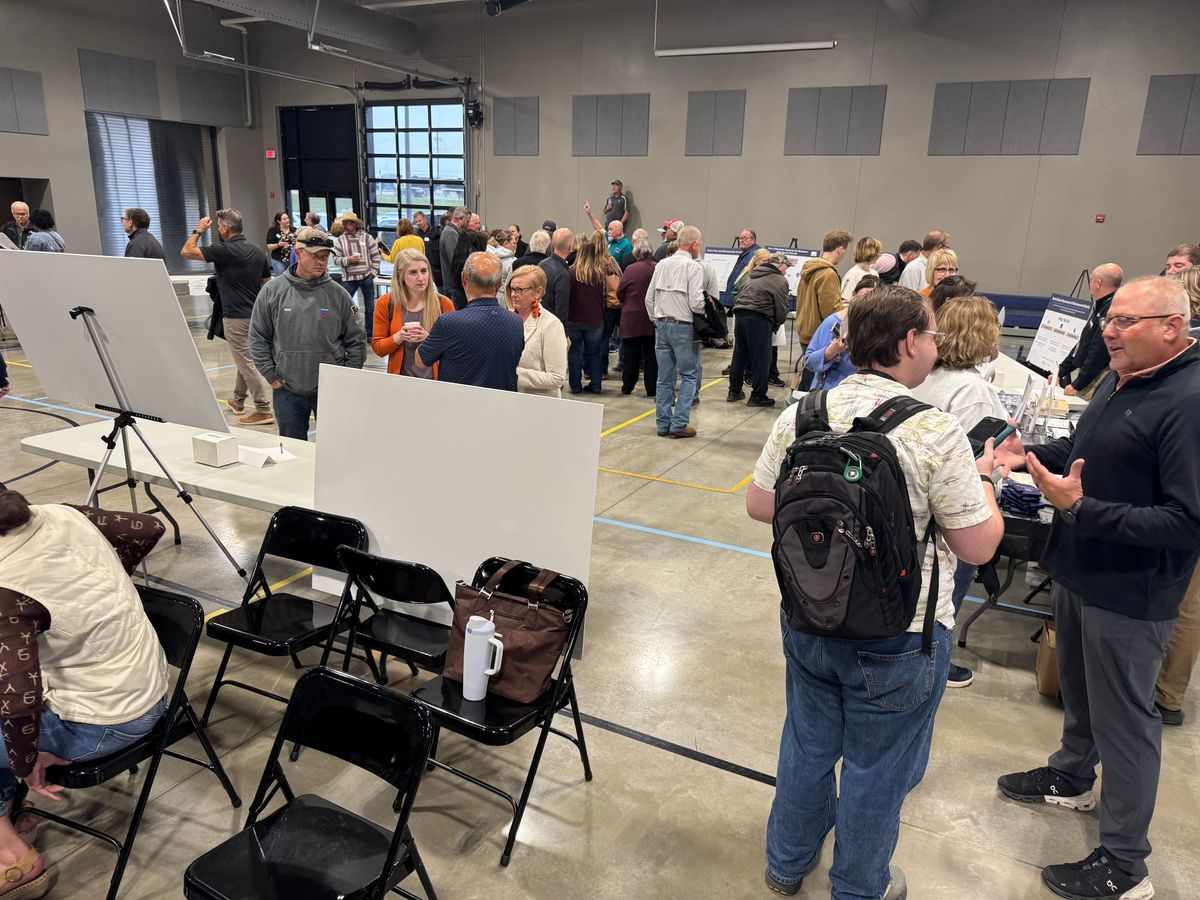
A rash of town halls across the state in recent months shows the questions are increasingly moving into public forums.
“I’m hearing more negative than positive right now,” said Isaac Jacobs, a Divide County commissioner at an open house on data centers in Tioga on Sept. 14.
“There are way more questions than answers,” Jacobs said.
Questions grow
Those questions are numerous and growing daily.
How much water will the facility use? Will that water come from a municipal water system? Will it be a one-time draw for a closed-loop system?
How much electricity? Will ratepayers be affected, positively or negatively? Are other transmission upgrades and buildouts being done to support data centers, and if so, are those costs transferred to consumers?
“They’ll say that they’re not raising their rates because of that, that they’re raising their rates because of something else,” Jacobs said. “But if one wasn’t there, would they have to do that by raising the rates and justifying them?”
What will be the tax revenue generated by the facility, and how will it benefit the local community?
One of the most dramatic small-town examples is Quincy, Washington, where property tax rates fell roughly 70% for locals after data center investment increased the tax base.
What do non-disclosure agreements mean for transparency and public input?
Examples of how communities dealt with NDAs include a case in Chaska, Minnesota just southwest of Minneapolis, which refused to sign an NDA but continued negotiations nonetheless.
Other situations have arisen across the country where elected officials refused to sign, or where NDAs were ordered to be released after officials signed them, or they were released after public pressure.
How many jobs will it bring, both during the construction phase and when it is up and running?
The U.S. Chamber of Commerce estimates that a typical large data center generates around 1,600 construction jobs over a 18-to-24-month period, while completed facilities average around 150 jobs if accounting for direct and indirect employment.
Does the project have an exit plan for when a facility is obsolete?
Some communities have put in abandonment triggers, bonds to cover potential decommissioning costs, or explicit rules that say a developer must cover reclamation costs before permits are granted.
For example, in Montour County, Pennsylvania, the local data center ordinance requires plans as well as financial security to cover 110% of the estimated decommissioning costs before permits are issued.
How much noise will the facility create? How close is too close to residences or other buildings?
To answer these, some communities across the country have built in setback and placement parameters, as well as required noise studies after construction.
Others have ordered the erection of sound barriers, required ongoing sound measurements during peak operation, or required buffers between residential communities and facilities of as low as 200 feet up to 1,000 feet.
The answers may be scattered out there, but for locals like Mike Smith of Divide County, they are often confusing and hard to come by because there are really no uniform guidelines or a one-size-fits-all approach.
“There’s so many different points of view in one extreme or another, as far as say, the water usage, or what the power consumption is going to be, and how it’s going to affect us as consumers,” Smith said. “Somewhere in there has to be a truth, and we’re not really able to figure that out.”
Communities don’t appear to necessarily oppose development associated with data centers, just many of the unknowns as well as the pace this is coming at them.
Local successes
Ellendale Mayor Don Flaherty spoke about the benefits of the initial Applied Digital blockchain mining facility and the new hyperscale data center currently being expanded in phases by the company.
Benefits have come to the town and surrounding area, notwithstanding some of the inconvenience on area roadways, and the town has not felt any direct infrastructure costs from the project, he said.
Flaherty said the existing Applied Digital blockchain facility provides 35 full-time jobs, while the hyperscale facility provides around 100.
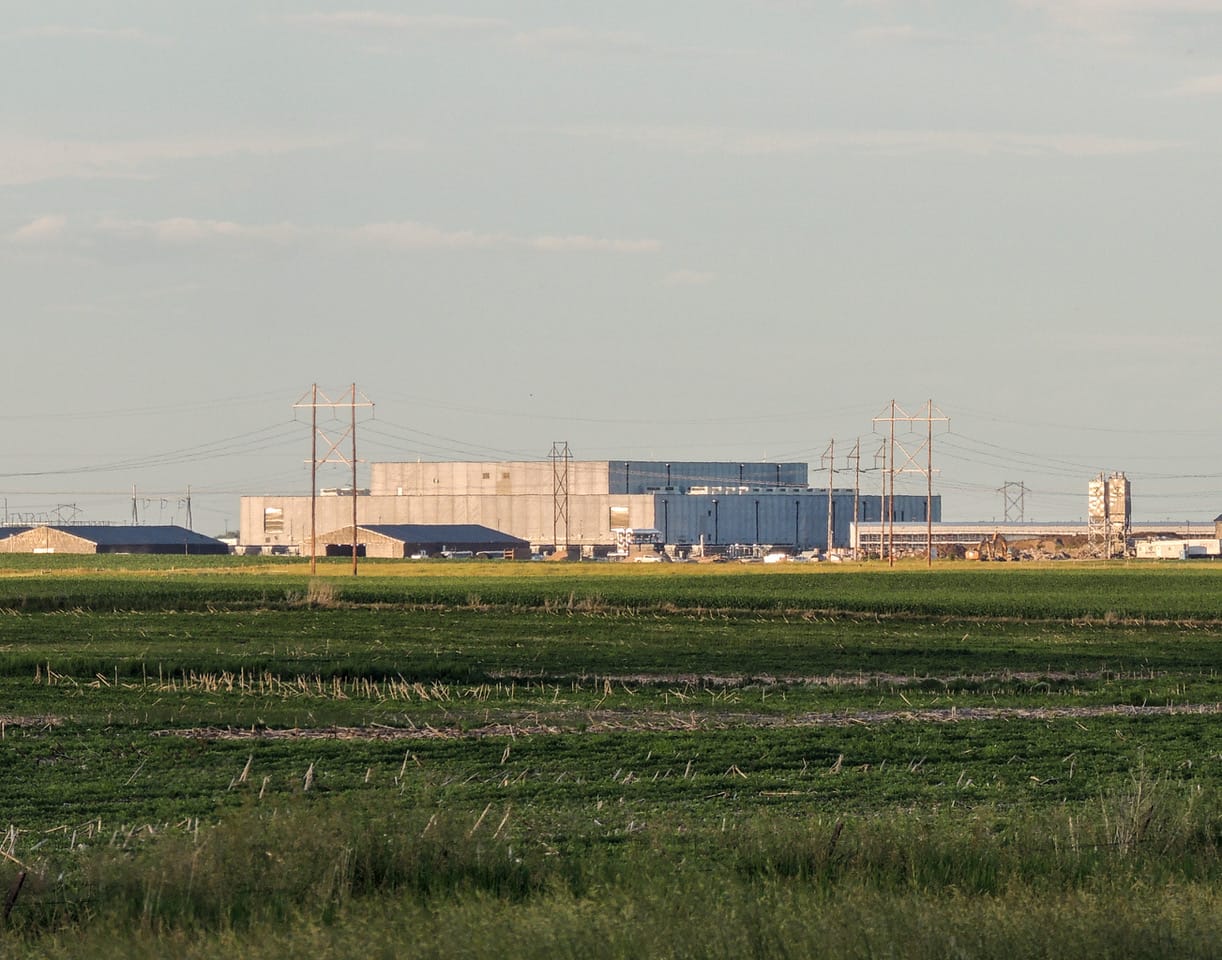
Once all phases of the hyperscale facility are complete, that number would rise to around 300 to 350 full-time positions, he said.
Around 60 percent of those are maintenance and security positions, and the rest are higher-level technical and engineering positions. This projects to a population growth of around 400 to 600 in the next five years, he said.
With all of the construction activity, Ellendale is on track to bring in around $6 million in sales tax revenue, though this will level off after everything is complete.
The sudden increase in sales tax revenue helped pay for renovations at a local senior center, with more allocated toward a local walking trail and downtown rehab projects, Flaherty said.
With all of the annexations, construction of new homes, and the buildout of the Applied Digital facility there, Flaherty said the town has already seen around $12.5 million added to the property tax base.
He expects that to rise to $37 million by the end of 2028 when the projects are completed.
“We're going to be able to provide tax relief and everything else to the people of our town and our city because of that,” Flaherty said.
“That’s affecting our county, our schools, our EMS ambulance service, our fire department,” he said. “They all see that growth because that data center is in their taxing districts as well, and so they're seeing huge amounts of additional revenue that they were never expecting before.”

Yet it’s up to communities and local governments like Flaherty’s to weigh those benefits against potential risks, with no overarching rules on data center development established in the state.
Murky waters
Efforts to pause the expansion and put into place systematic rules failed to make it through the legislature during the recent special legislative session in early September.
A bill that would have prohibited political subdivisions from entering non-disclosure agreements with data centers and other industrial projects failed to make it out of the Senate on Sept. 3.
A proposed statewide moratorium on new data centers or expansions was rejected as well, and a new proposal to study data centers failed to advance.
State Sen. Mark Enget (R-Powers Lake), who helped organize the Tioga town hall, said the recent session did not clarify matters and that the debate will spill into the next official legislative session in January.
“In which form or fashion, I can’t really tell you, but I don’t think a moratorium is the solution,” Enget said. “We have to go through all the different caveats of an appropriate bill that encourages industry to work in North Dakota while not compromising the values of the communities that we serve.”
That’s increasingly a hard tightrope to walk for many politicians nationwide, from the top to the bottom, as public backlash grows.
A poll released on Sept. 17 by Marquette University Law School found 71% of Americans believe the costs of building data centers outweigh the benefits, up from 62% polled in January.
“A lot of people want to know what the benefit to the county is truly going to be,” commissioner Jacobs said. “People are wanting to make sure, myself included, that we’re not moving too fast and that we don’t have enough of the answers, or all of the answers.”
Besides serving in the legislature, Enget is also on the planning and zoning commission for Burke County, and he said they’re building out a local ordinance on data centers.
“Really, it comes down to proper ordinances being put into place by the city or the county,” Enget said.
In the end, the main question for North Dakota is whether state and local rules and public processes can catch up fast enough with data center development to better determine costs and benefits going forward, now and a generation from now.
Vern Thompson, a Dem-NPL candidate for agriculture commissioner, said it is especially important for local communities with worries about long-term risk to get a decommissioning agreement from projects up front.
“Let’s slow down, let’s look through,” Thompson said. “If it is a good project, it can wait for a bit.”
Support Independent Journalism
Your donation to the North Dakota News Cooperative puts our communities first by delivering in-depth reporting on the issues that matter most.
Donate to NDNCThe North Dakota News Cooperative is a nonprofit news organization providing reliable and independent reporting on issues and events that impact the lives of North Dakotans. The organization increases the public’s access to quality journalism and advances news literacy across the state.
Have a story idea? Send tips to michael@newscoopnd.org. Connect with us on X or Facebook.