Research shows managed grazing benefits cattle, soil health, increases carbon capture
Potential to incentivize practices, pilot initiatives in state with legislative approval
North Dakota has a Grand Farm for expanding the latest in agricultural technology and a Grand Sky for testing and perfecting unmanned aerial systems.
New research showing managed grazing can benefit soil health, pasture ecology, and sequester carbon could give impetus to the idea for a “Grand Ranch” to deliver ranching techniques that better manage the land, store carbon and grow larger cattle.
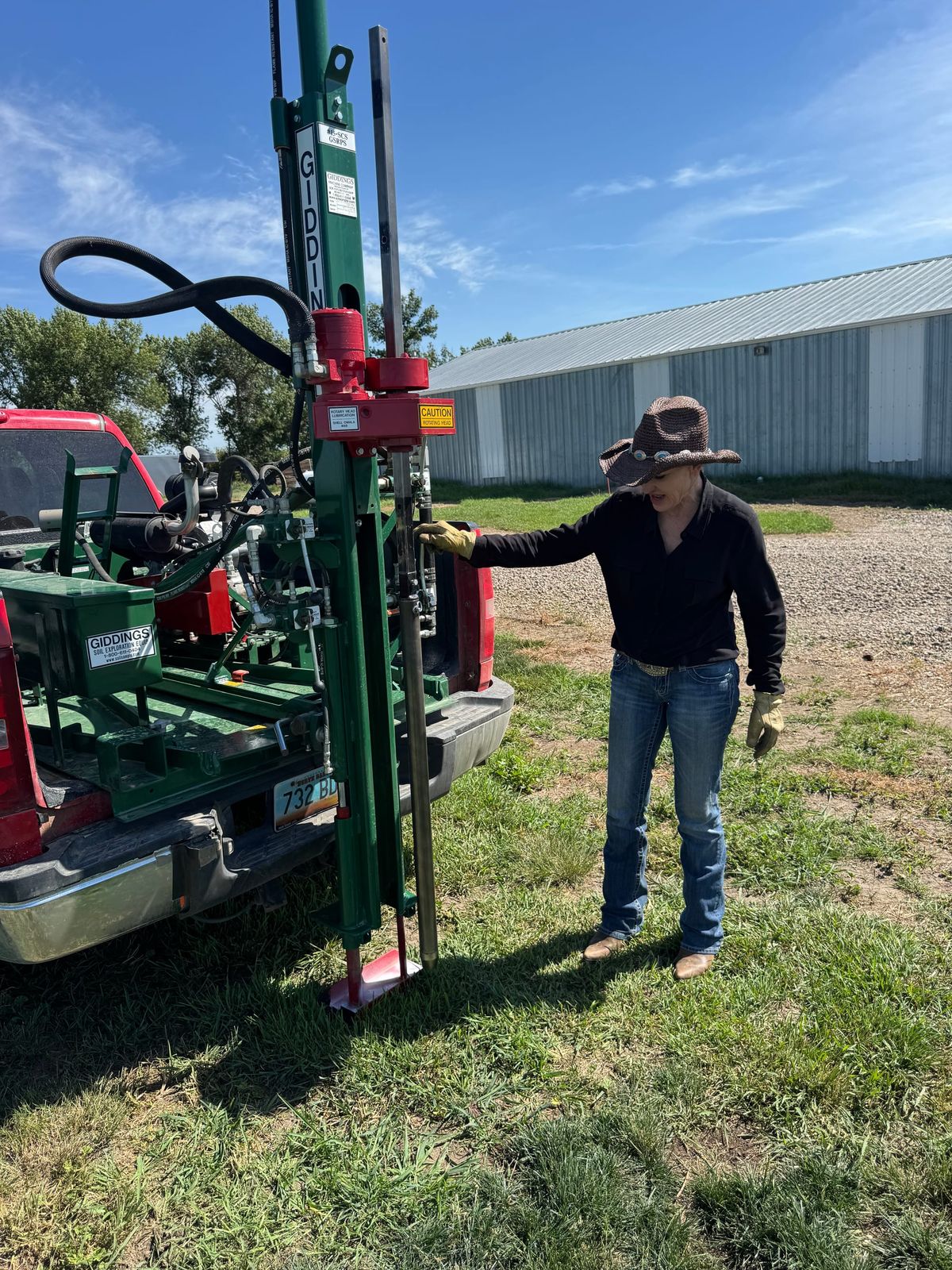
Work done by scientist Rebecca Phillips to gather data on a ranch near McKenzie and another near Hazelton was just released by top science journal Nature’s Scientific Reports, becoming the first published account of the carbon benefit for a multi-paddock grazing system.
Phillips found that these systems can sequester between 330 and 900 pounds of carbon per acre per year, a rate 23% to 53% higher than on ungrazed pasture.
The study shows managed grazing also provided for more biological diversity on the land, greater water conservation, healthier and beefier cattle and improved soil and pasture health.
Phillips said the study can lead policymakers to incentivize these practices to make them more of the norm than the exception.
“In the big picture, it would be nice if there were more incentives for adopting these kinds of practices, because having done this myself, it's not trivial,” Phillips said. “It does take time and investment and everything.”
Phillips pointed toward how power plants and other facilities are incentivized by U.S. federal credits providing $85 per metric ton of carbon dioxide captured, and how row-crop agriculture is incentivized through the Conservation Reserve Program as well as programs like the Environmental Quality Incentives Program (EQIP) for planting cover crops.
“I really think just like any farm program, if there's more financial incentives, people will do it,” Phillips said.
Yet there’s nothing on the ranching side that could essentially incentivize carbon capture, soil health and grassland biodiversity all wrapped into one, as the study demonstrates can be achieved.
“The carbon sequestration we're getting right away from the grazing system exceeds the carbon sequestration benefits reported for cover crops or no-till agriculture,” Phillips said. “When you compare rates, the grazing system can exceed those.”
Phillips said it would be great to pilot something on the state level in North Dakota to demonstrate the widespread effectiveness of implementing these rotational, managed grazing systems.
“It's very nonpartisan in my mind,” Phillips said. “Because everyone wants ranchers to succeed, and everyone wants to see healthy soils and wildlife habitat and all that.”
State Senator Tim Mathern (D-Fargo) said the study shows there’s a market for carbon capture on ranch land and that ranchers could monetize that through implementing these systems.
“What intrigues me is we have this grassland resource that has so much more potential in this concept of carbon intake, and we are not focusing on that,” Mathern said.
“And it’s not just the carbon. You get more pounds off the animals and you grow soil. It’s those three variables together.”
During the last legislative session, Mathern proposed a nearly $50,000 study bill (SB 2246) to look into the idea of creating a “Grand Ranch,” though this failed to advance after the second reading.
Mathern hopes the work Phillips has done to quantify the impacts managed grazing has on the land will lead to the resurrection of the idea and said he’s looking for legislative partners to help draft a bill for the next session starting in January.
"This is something ranchers in the Dakotas have known for a long time,” Lewis Heaton, who collaborated with Phillips for part of the study on his land near McKenzie, said in a statement released by the Dakota Resource Council. “Now we have the science to back it up. A well-managed herd is not destroying the prairie. It is helping rebuild it."
Support Independent Journalism
Your donation to the North Dakota News Cooperative puts our communities first by delivering in-depth reporting on the issues that matter most.
Donate to NDNCThe North Dakota News Cooperative is a nonprofit news organization providing reliable and independent reporting on issues and events that impact the lives of North Dakotans. The organization increases the public’s access to quality journalism and advances news literacy across the state.
Have a story idea? Send tips to michael@newscoopnd.org. Connect with us on X or Facebook.