ND Ag commissioner candidates offer different views on data center development
Varied thoughts on who is responsible for setting rules
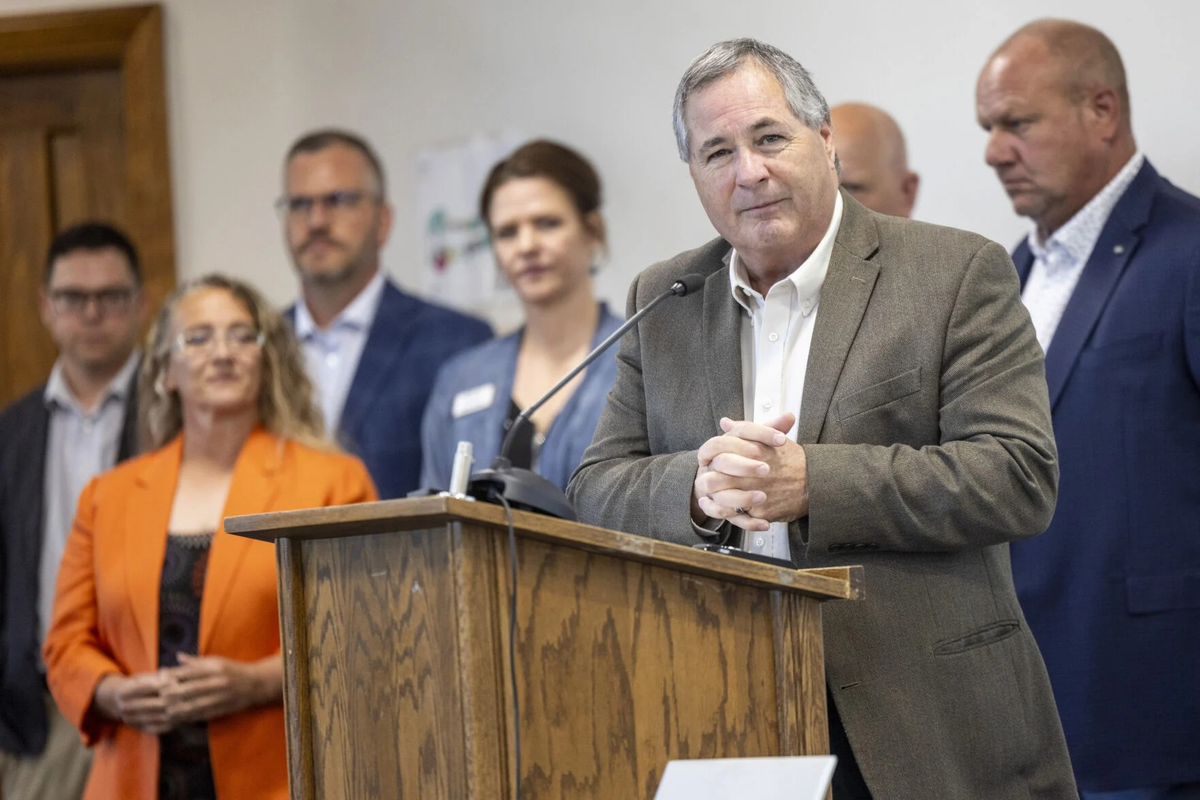
While North Dakota’s two candidates for agriculture commissioner both agree that local governments should decide on location of data centers and property owners have the right to sell land for those developments, they differ on the role state agencies should have in guidance.
They also offer different views on how concerned the people of North Dakota should be about data center development.
Doug Goehring, incumbent agriculture commissioner, said he sees the need for data centers that can add value for agriculture through data storage and powering technological developments like the use of drones and precision agricultural systems.
“Agriculture is becoming more and more tech driven,” Goehring said.
Goehring, who sits on the Industrial Commission along with the governor and attorney general, said regulating data centers is not under his authority and any rules or regulations around them should be decided by the legislature.
“The legislature generally has to create a law or figure out what they're intending to do, and they've been having meetings all year on it,” Goehring said. “They'll be coming up with something, I'm sure, in the next legislative session.”
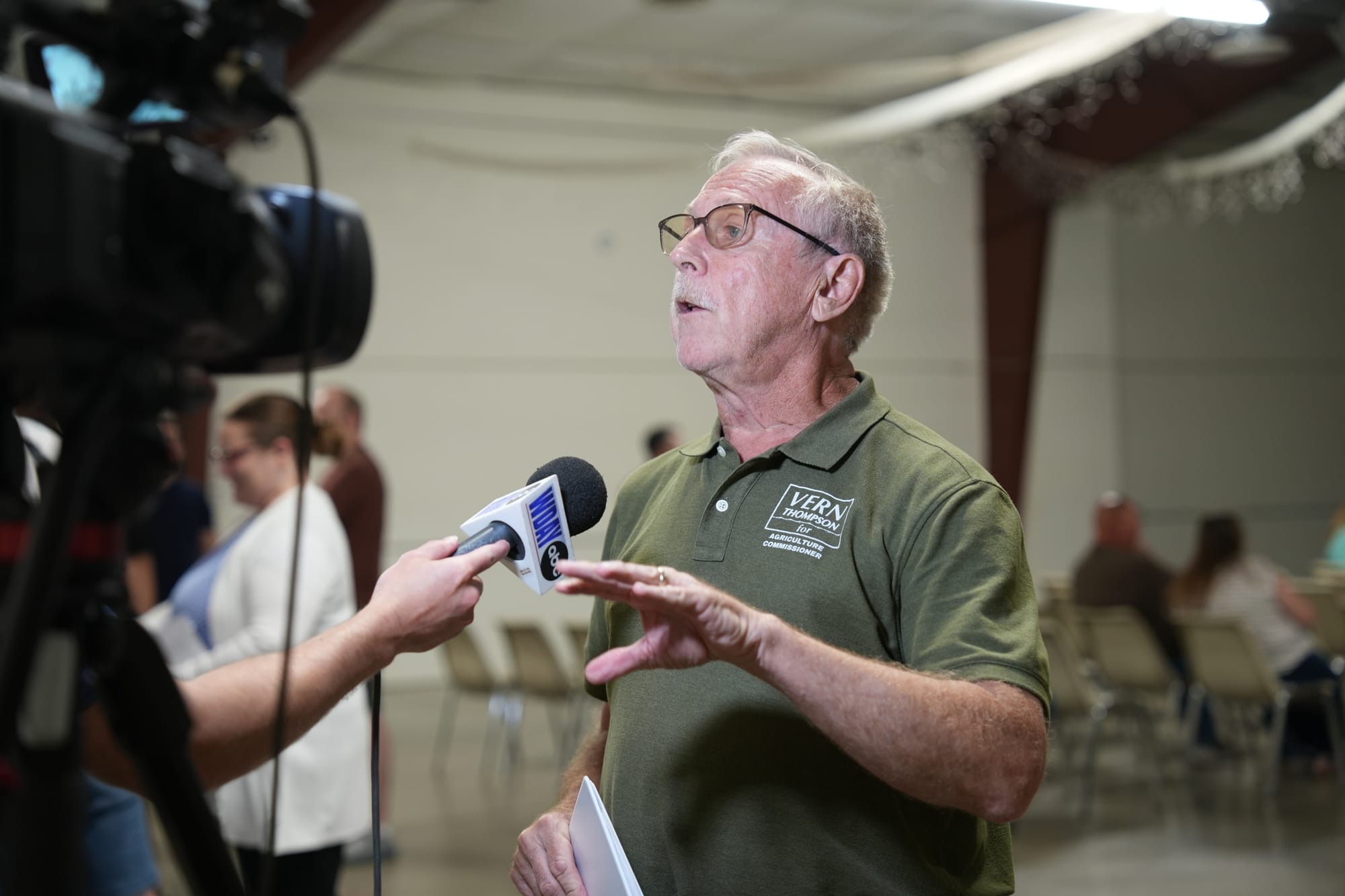
Dem-NPL challenger Vern Thompson, a former state legislator and farmer, argues that the Industrial Commission should have taken a leading role and been more active, particularly because legislative rules have not caught up to the rapid pace of data center development.
“I think it's the most important issue facing the people of North Dakota and its future,” Thompson said of data center development. “We're at a time where we need to take it slow and deliberate, and understand what we're doing.”
Thompson has developed what he called a “responsible hyperscale development framework” he’s shared with townships and others who have questions and concerns when data centers come looking for land to develop.
“Some townships are using it, and then they're adapting for what they want because they didn't get any leadership from the state level,” Thompson said. “They felt like they were on an island on their own.”
While Thompson said local political subdivisions should be the ones deciding where data centers develop, he believes local governments haven’t been given enough information or expertise to make those decisions themselves.
“We don't have the state government trying to put together a plan on how to deal with these things,” Thompson said. “We don't have laws or regulations in the Century Code and regulations to deal with the impacts. And this process has really become the new Wild, Wild West.”
Goehring said much of the debate comes down to private property rights and local zoning, and that if a state-level regulation is developed by the legislature, that should provide the guidance for future development.
“I know my place. I'm in the executive branch,” Goehring said. “(Legislators) have to develop the framework with the things they’d like considered.”
Both candidates said they respected the rights of property owners to sell their land and both expressed reservations related to data centers developing on prime farmland.
Thompson said there should be more ordinances and zoning related to transferring valuable farmland to industrial use and it may take changes in the next legislative session for that to happen.
Goehring said that in his role on the Industrial Commission, he has encouraged industrial developers, whether for energy projects or other industrial sites, to mitigate noise and other impacts, as well as to locate projects on land with the least agricultural value.
“I've always encouraged them,” Goehring said. “I can't tell you where you can build or put it, but I would encourage you to take the poorest ground that you have, the least producing land.”
Thompson said local governments need to secure both a community benefit agreement and a decommissioning plan up front from data center developers.
He said bonding for decommissioning should be at 125% of the cost of taking down a facility, and that it should also have language in it about inflation.
“We need technology and I want to see if artificial intelligence can help us cure cancer or heart disease or other debilitating diseases,” Thompson said. “I’m not anti no way no how hyperscale data center. From the beginning I’ve said we need to slow down and do it the right way. We need to do it right the first time.”
For his part, Goehring said he didn’t see a lot of risk of data centers being abandoned and that local bonding and tax liability requirements should be able to keep such prospects in check.
If a data center did close, he said, the facility could be repurposed as a warehouse, for manufacturing, a trucking firm, or potentially an indoor livestock facility.
“I can't imagine in the upper Midwest where you would see those types of facilities (abandoned),” Goehring said.
Goehring noted that data centers and other industrial developments can contribute tremendous tax revenue to local jurisdictions.
Thompson also raised concerns about the potential water use of data centers.
He said officials who say the data centers use minimal water because of closed-loop systems miss the point in the overall spike in water use due to the increased power needs across the state.
“The concern is about the power to run the data centers, the water for electricity, whether it's natural gas, whether it's coal, whether it's wind, wind energy, whether it's solar panels, all these things fit into you know what AI hyperscale data centers are going to need,” Thompson said.
Thompson said he would support a water use study to determine whether there is enough for human consumption, for agriculture and then for industrial use.
Goehring said that currently, there’s an abundance of water in the state and that only 4% of groundwater is appropriated.
He said most of the references to heavy water use by data centers come from southern states where massive heat means more cooling needs.
“The problem with trying to bring that narrative up here, they use that to scare people or get people wrapped around the axle,” he said.
Goehring said the same argument has been brought up in opposition to large-scale animal agriculture, which could potentially have more water needs than a data center.
He also said a water use study could be helpful.
“Maybe it would put some things to rest where people wouldn't be alarmists,” Goehring said. “It would just help people have a better understanding of the resources that exist in North Dakota and how we can continue to develop them responsibly.
Support rural news by donating now.
Because we don't receive network funding, our independent journalism relies on supporters like you.
Donate to NDNCThe North Dakota News Cooperative is a nonprofit news organization providing reliable and independent reporting on issues and events that impact the lives of North Dakotans. The organization increases the public’s access to quality journalism and advances news literacy across the state.
Have a story idea? Send tips to michael@newscoopnd.org. Connect with us on X or Facebook.