Grand Farm provides tech fix for farmers’ most pressing needs
Major focus currently on resistant weed control, other pain points
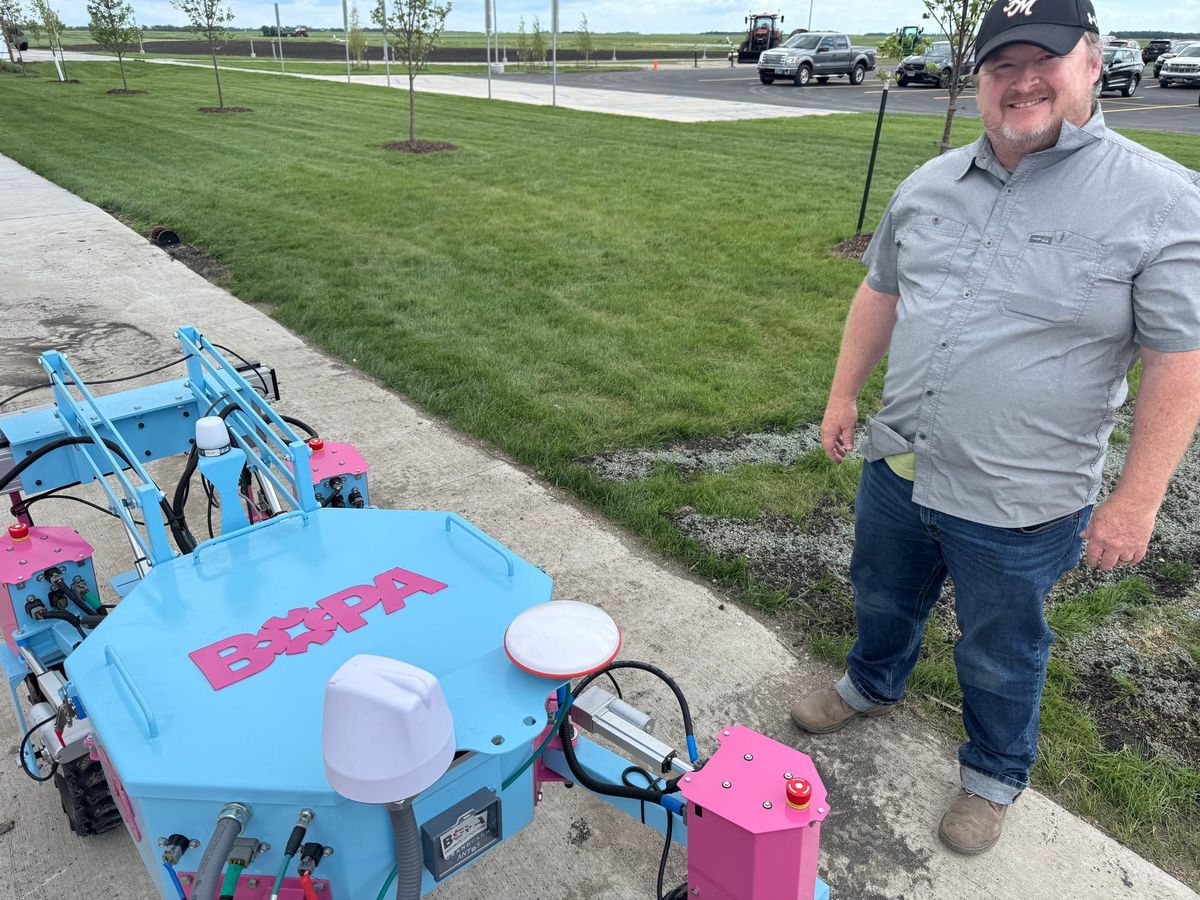
Robots that kill herbicide-resistant weeds with pinpoint precision. AI-enhanced drones that tell farmers exactly where to spray. Smart sprayers that identify and eliminate superweeds before they spread.
Those are among the technologies being tested at the 600-acre Grand Farm Innovation Campus near Casselton, where researchers, startups and producers are trying to solve some of agriculture's biggest challenges.
Herbicide-resistant weeds are currently one of the biggest problems facing producers, Grand Farm co-founder and program manager William Aderholdt said.
Having the campus here in North Dakota has allowed collaboration and testing that will speed up the process for finding solutions, he said.
“We’ve got tons of companies here trying to solve that,” Aderholdt said. “The ability to have these technologies take that on is really a huge benefit for our growers.”
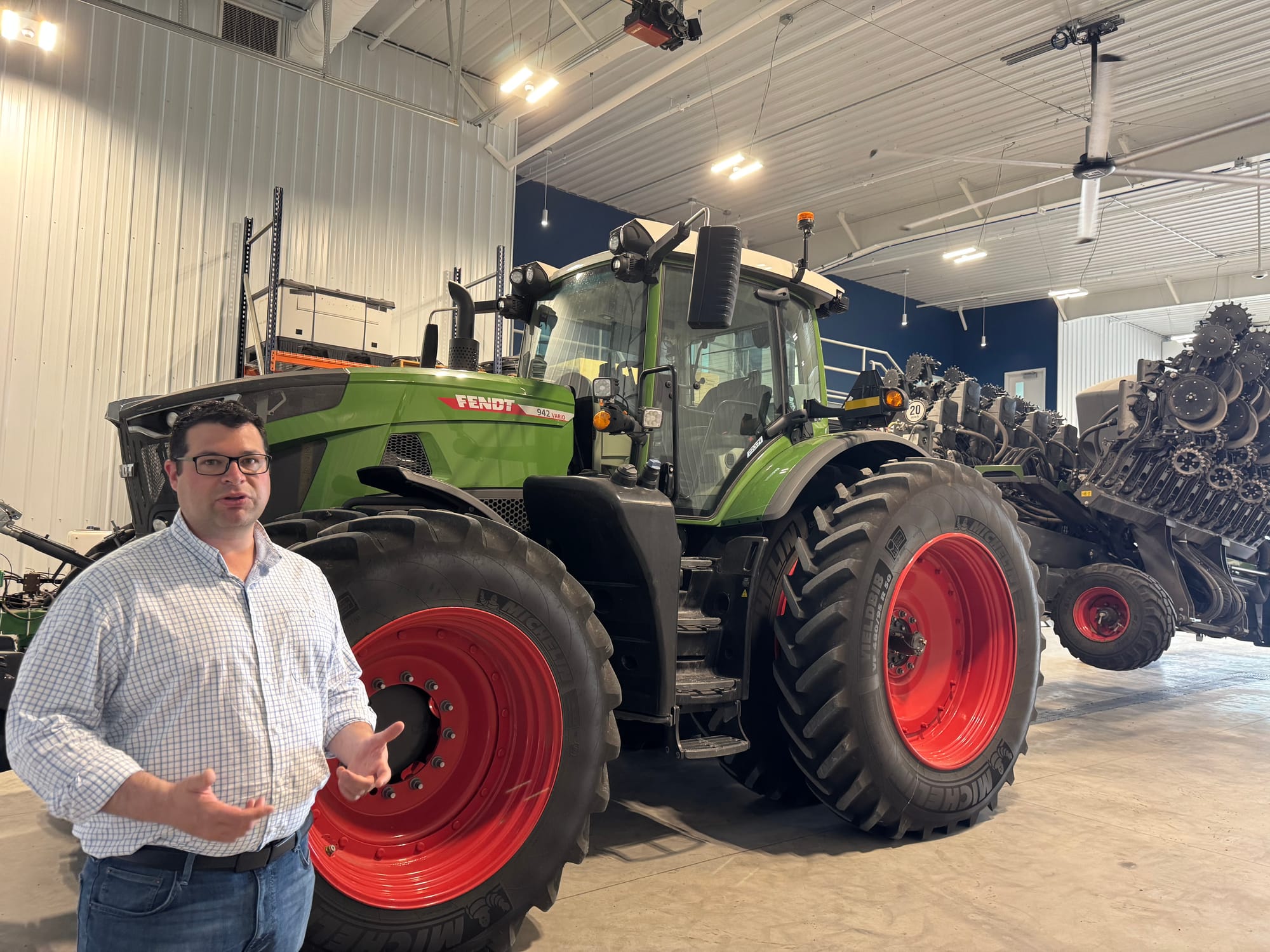
In just a few short years, after a $10 million grant from the North Dakota Legislature and Department of Commerce in 2022 helped with the construction of the physical campus, Grand Farm has attracted over 20 startups to relocate their offices or headquarters to North Dakota.
The broader ecosystem that’s been established - corporate players, startup companies, researchers at North Dakota State University and elsewhere, venture capital investors, and producers themselves - now stands at 90 partners.
Outside of the partnerships, over 3,500 organizations and 600 startups are also involved in the network.
That’s quite a pool of knowledge startups trialing technology at Grand Farm to tap into, those involved in the initiative said.
Setting this up in North Dakota provides the ability to test widely, co-founder and chief operating officer Brian Carroll said, which ultimately speeds up the timeline for startups trying out new technologies.
“North Dakota has a huge advantage because we have 45 cropping systems, so if you come here you can test in a variety of different situations,” Carroll said.
“What ultimately happens is they start to come here, they build operations here, and in some cases, they’ve moved their headquarters here, so there’s a bit of an economic development angle to it all as well.”
Carroll pointed to Seattle-based Aigen, which expanded operations in the Fargo area after testing at Grand Farm, and aerialPLOT, an Ohio agtech software company that recently relocated its headquarters to Fargo.
Those expansions and relocations are leading to job creation as companies build out labor forces to operate robotic and other technologies, he added.
A separate $7 million grant from the state’s Department of Commerce for autonomous agriculture has also helped scale up research on AI, robotics and other technologies that can address the major challenges for producers.
“The life cycle that it takes to go from pain point to solution, this takes that from years, to months, to weeks, to days,” Carroll said of the collaboration that’s been developed.
“That’s how powerful these technologies can be, and then to be able to use this model in order to inject technology from all around the world into local problems,” he said.
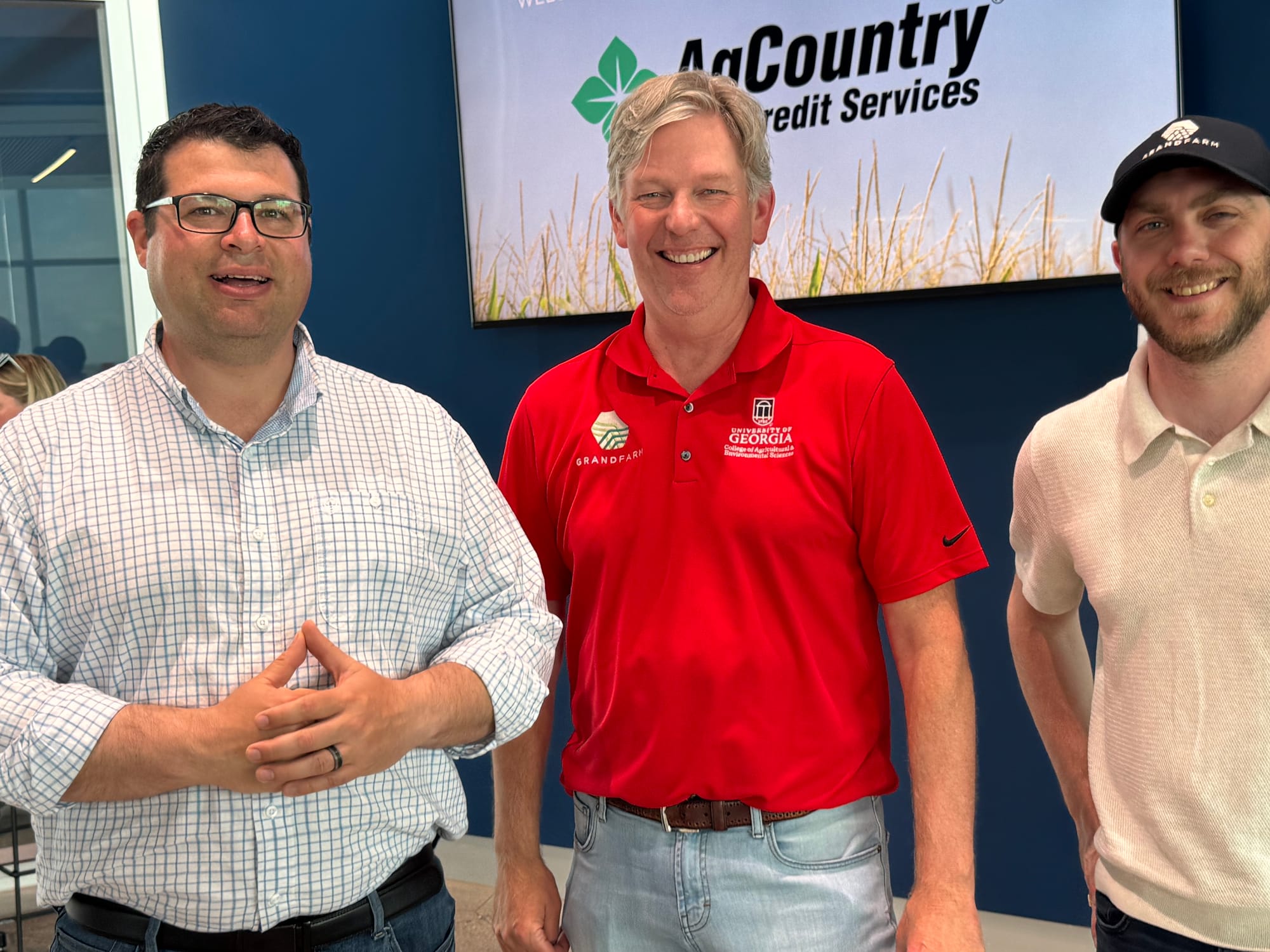
Grand Farm's model is also expanding beyond North Dakota. A partnership with the University of Georgia has allowed them to establish a testbed there as well, with 15 partners involved in testing at that site, which has different geographic, weather, soil and cropping system attributes than what’s possible at the North Dakota campus.
Addressing production problems as they arise and then quickly finding solutions is another aspect of what they hope Grand Farm can accomplish, said Aderholdt.
“Last year at this time, commodity storage and prices were the biggest concern,” Aderholdt said. “Now it’s a lot of the input and fuel prices rising that farmers weren’t able to prepare for. So the ability to move fast and find the solutions is really important.”
Mark Watne, a fourth-generation farmer from Velva who served as the 12-term president of the North Dakota Farmers Union until recently, now provides input for Grand Farm as a member of its board.
Watne said the rapid pace of technological change has become overwhelming for many producers.
Watne said many producers struggle to adopt new technologies because of the cost and time required to test them.
“GPS spraying systems, access to information through AI, all these … it can be too much over our heads,” Watne said.
Having the testbed that can work through all those issues in the testing phase before they get to the practical, producer level is a huge benefit to farmers.
For Watne the goal should be to keep a stable number of family farms and keep communities surviving, so figuring out what works and fits is extremely important.
“There’s just an amazing number of companies bringing products here, and I guarantee they’re not all going to fit, and if they don’t fit here, they may elsewhere and be adapted to other parts of the country or around the world,” Watne said.
Another aspect is that for the US to maintain its position as a top food producer, technologies like this need to be tested and perfected, Watne said, referring to a recent visit to Portugal and Kenya where he saw strong investments and advancements.
“The US was really strong in production of food agriculture, and still is, but it’s because we built the infrastructure and capacity to do it,” Watne said, adding that countries are finding efficiencies and outpacing us in certain technologies.
“If we don’t help make that investment, we could find ourselves in situations where we’re not as competitive in the world market as we hope,” he said.
Support rural news by donating now.
Because we don't receive network funding, our independent journalism relies on supporters like you.
Donate to NDNCThe North Dakota News Cooperative is a nonprofit news organization providing reliable and independent reporting on issues and events that impact the lives of North Dakotans. The organization increases the public’s access to quality journalism and advances news literacy across the state.
Have a story idea? Send tips to michael@newscoopnd.org. Connect with us on X or Facebook.