NSF-backed AgTech Engine aims to make ND agricultural innovation hub
Goals of local development for a global competitive edge
Florida got semiconductors, New York energy storage, North Carolina advanced textiles, Louisiana alternative fuels, Texas got defense and aerospace.
North Dakota, beating out 179 other proposals from around the country, got advanced agriculture.
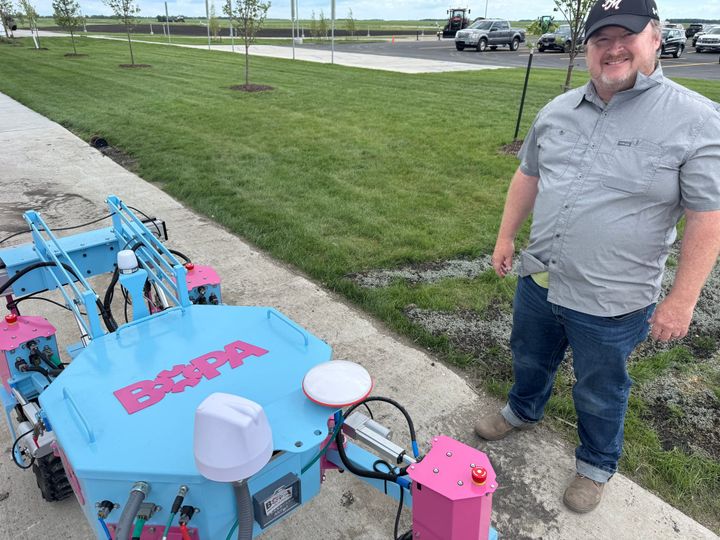
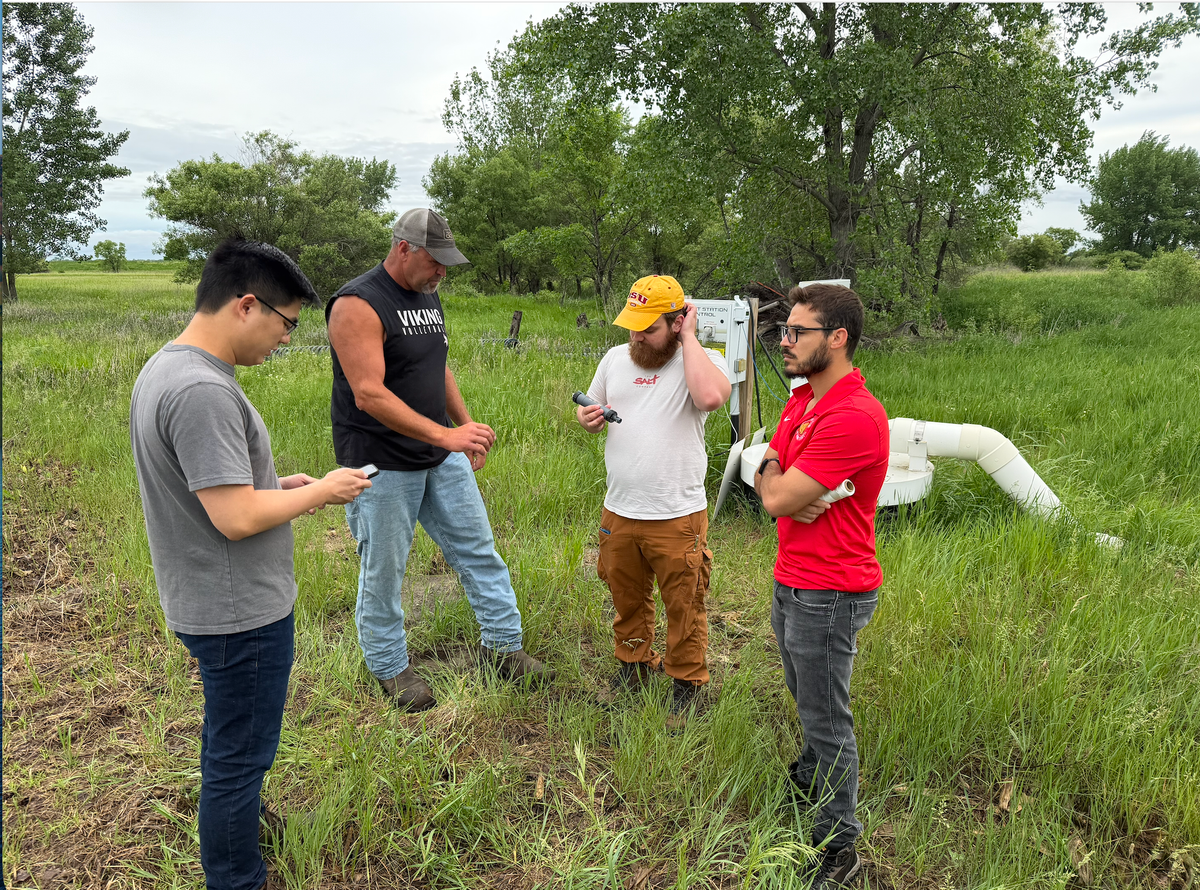
On farms across North Dakota, researchers and startups are testing autonomous equipment, precision agriculture systems and new ways to use data to boost productivity.
Behind many of those efforts is a larger federal experiment: the NSF AgTech Engine, a program designed to transform the region into a national center for agricultural technology with global reach.
The federal government is betting that regional technology innovation ecosystems - not just Silicon Valley - can generate the next wave of economic growth.
When the National Science Foundation selected North Dakota two years ago as one of its 10 inaugural “tech engine” locations, the news came with little fanfare and possibly even less awareness statewide regarding the importance of the selection.
Now in its second phase in utilizing what could amount to a $160 million grant over 10 years, the ND AgTech Engine is building out advanced ag tech programs with a special focus on workforce development that connect universities, startups, industry and investors.
“We’re really redefining what ag tech looks like, knowing that for 20 years there’s been a lot of hype and not a lot to show for it,” said Hollie Mackey, CEO of the engine.
“Our goal is to show there are tangible outcomes and effects that you can demonstrate exactly what you’ve done and how that improves farmers' businesses,” she said.
The engine is driven by researchers at North Dakota State University, and partnered with Grand Farm, the Fargo Moorhead West Fargo Chamber, and the Fargo Moorhead Economic Development Corporation during the first two years.
“It’s a reflection of how NDSU is really leading the way forward in innovation in agriculture at the national level in so many ways,” U.S. Senator John Hoeven said of North Dakota being awarded the engine.
“It’s really about national leadership in terms of not just precision agriculture, but really the future of agriculture and innovations that will make our system of family farms stronger in the future,” Hoeven said.
Over the next decade, the engine will set the state up as a driver of advancements in agriculture technologies spanning from plant and animal science to cutting-edge equipment, those with the group say.
The focus, Mackey said, is to concentrate on technologies that address the biggest challenges for growers, farm producers and livestock producers.
Agronomist Michael Frank, who works as a consultant for the engine, said there’s an eagerness for growers in North Dakota to try different things since they have some of the most challenging conditions in maintaining profitability and continuing their family operations.
“They’re eager for something new, something to help ease the burden, something to help increase revenue on their farms, to keep their farms in the family and to really keep the rural economy alive,” Frank said.
Engine advisory board member Josh Gelinske, a chief technology officer at NDeavor, said the mission revolves around solving local food security issues and working with producers to drive local economic development.
“If we really want to spur rural economic development, grow healthy communities, and have a healthy and resilient food system, we need to support the producers,” Gelinske said.
“We need to support producers with technologies that either put more money in their pockets, or keep more money there,” he said.
Support rural news by donating now.
Because we don't receive network funding, our independent journalism relies on supporters like you.
Donate to NDNCProject Whitewater
One program developed so far does just that.
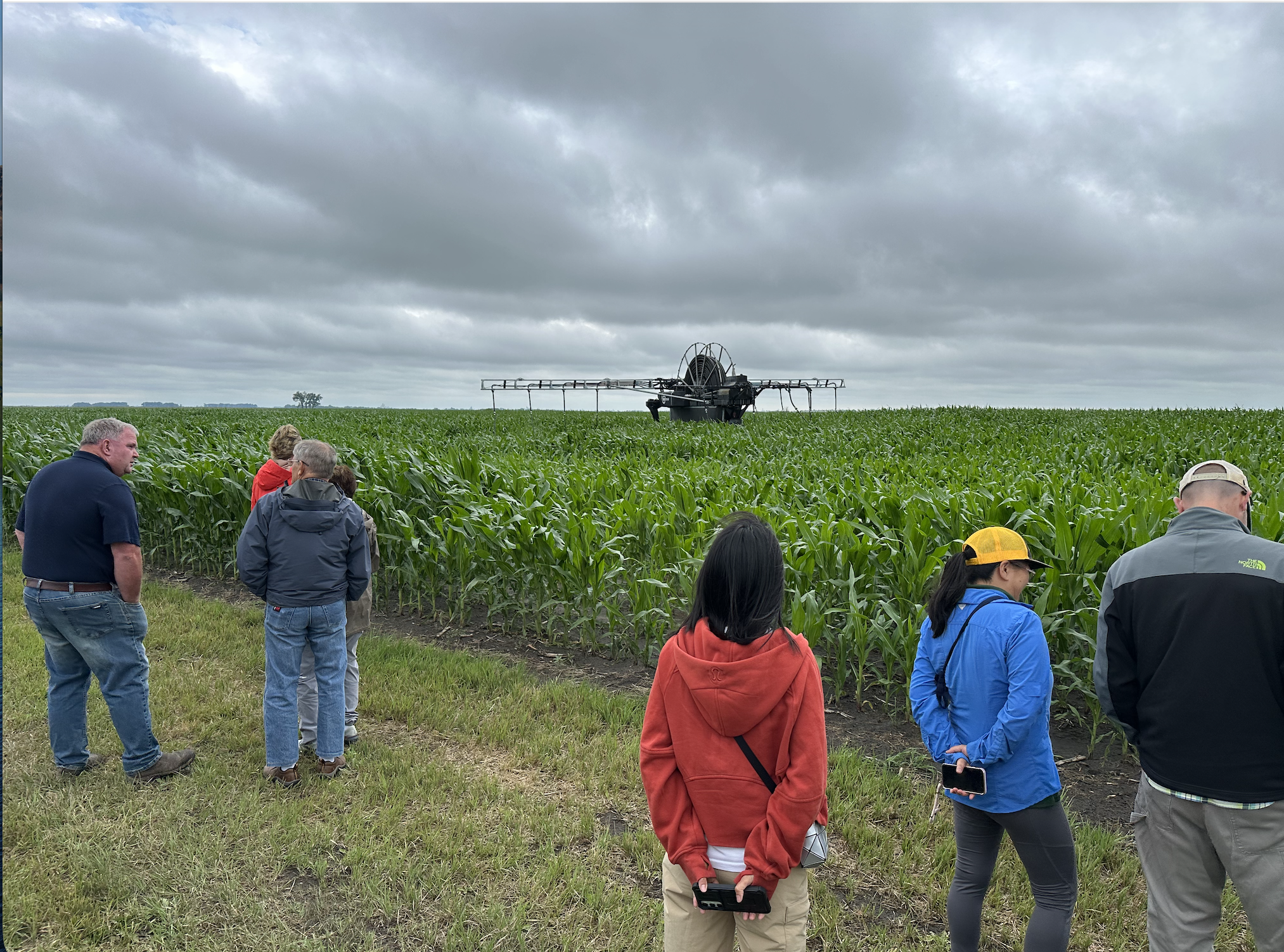
Called Project Whitewater, the effort focused on developing a product using satellite images and weather data to create daily soil moisture maps to help farmers use precision irrigation techniques on their fields.
This could perhaps bypass expensive ground probes currently used that come with accuracy issues, Gelinske said.
The project first conducted a field trial last year at a farm near Oakes, with the data being used to decide when the farmer should run his irrigator and how many inches of water on specific areas of the field.
That quickly expanded to five testing spots throughout the state and off of that, Aperture Earth, the startup, was able to leverage $3 million in venture capital funding to quickly accelerate its product.
“Now he’s all over the place,” Mackey said of Aperture Earth founder Dr. Zachary Kabelac, an MIT-educated engineer, who has started branching out to areas in the country like Nebraska where drought and water pressure issues are severe.
What was learned from the Oakes and other trials was that using the data for precision irrigation saves growers hundreds of thousands of dollars a year in irrigation costs and really improves profitability, Mackey said.
“What we’re doing is trying to close the loop on water, and we can do that here in North Dakota and then scale that across the country and across the world, really,” Gelinske said.
Workforce development
Another critical component of what the engine hopes to do is accelerate workforce development and foster the jobs that will be on the cutting edge for the next technology wave.
That included creating a workforce team that held community events across the state, and the creation of the AgTech Workforce Innovation and Industry Center (AGWIIC), which will be a main focus of the second phase of the engine’s work over the next few years.
“What’s really interesting to us is how we can invest in workforce development and rural economic development, where we put our money into communities, and then the money stays in a community and has a return on investment,” Mackey said.
Both direct and indirect jobs could be spurred by increased technological development in rural areas, Gelinske said, mentioning the need for field service technicians, installers, front-line support and salespeople for these future products.
“As these new technologies come online, again from that workforce standpoint, somebody actually needs to help get them implemented, get them installed, get the growers up and going, and service them, all those things,” Gelinske said.
Competitive edge
One of the most exciting aspects of the rollout of the 10 NSF tech engines across the country for Mackey so far has been how collaborative the leaders have been with each other, she said. Each Friday they gather virtually to talk about the shared challenges and shared ideas.
“The NSF didn’t design it this way, we’ve designed it this way,” Mackey said. “When we started, we immediately stepped in and say, we’re collaborators, not competitors, and we’re going to build this together or we’re not going to build it at all.”
Mackey described the relationships that have developed as “really deep and rich” and that it allows the leaders of the engines the ability to share ideas across different technology spaces that may lead to connections and collaborations, even if there might not be clear links from the outset.
And while not competing against each other, initiatives like this do compete with countries across the world also attempting to advance their own cutting-edge technology programs.
For example, since 2010 one of China’s core development policies has been a key strategic emerging industries program that has funneled money, research and expertise into developing new energy vehicles, alternative energy, advanced materials, biotech, advanced robotics, artificial intelligence, and next-generation information technology systems.
Companies like Huawei (IT), BYD (EVs), Baidu (autonomous vehicles), and DJI (drones), have benefited greatly from massive subsidies and tax incentives provided through the strategic industry policy in both developing locally and taking leading positions globally in their sectors.
According to data released June 1 from the Organization for Economic Cooperation and Development, Chinese companies received between 3 to 8 times more subsidies compared to their competitors in OECD countries during the period from 2005 to 2024.
“North Dakota is an ag powerhouse for this nation, and our farmers and ranchers compete globally, not just competing against China, but many other countries,” Hoeven said. “We produce food, fiber and fuel, not just for America but we’re big time exporters, so yeah, it is about global competition and making sure we win.”
Mackey sees the strategic nature of what they’re building here as important for national security as well as building the next generation of great American companies, and the CEOs were briefed by top security officials about the importance of what they’re developing.
“Ag tech is one of the most sought-after technologies for malign foreign actors to acquire because you can easily weaponize it,” Mackey said.
At the outset, Mackey said she was briefed about how vulnerable the U.S. is in a war that went after the food system since most of the food production is locked up with producing energy and commodity crops.
“I think a lot of (the idea for the NSF engines) was this investment in national security, through topical areas that fit into this bucket of what we need to have a secure nation,” Mackey said.
Support rural news by donating now.
Because we don't receive network funding, our independent journalism relies on supporters like you.
Donate to NDNCThe North Dakota News Cooperative is a nonprofit news organization providing reliable and independent reporting on issues and events that impact the lives of North Dakotans. The organization increases the public’s access to quality journalism and advances news literacy across the state.
Have a story idea? Send tips to michael@newscoopnd.org. Connect with us on X or Facebook.