
Year-round DST could hurt ND kids
More sunrises would occur after 8 a.m., latest around 9:45 a.m.
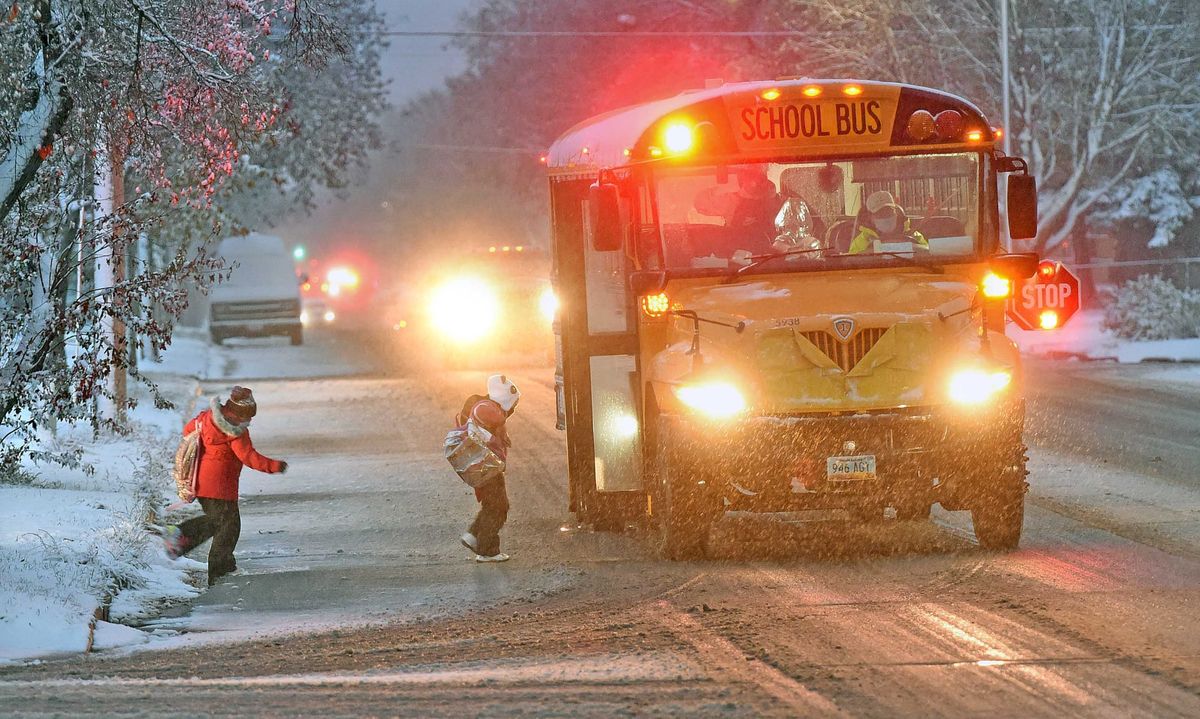
It’s Dec. 21, the shortest day of the year.
In Williston, sunrise normally comes at 8:42 a.m. that day.
Under proposed permanent daylight saving time, it wouldn't rise until 9:42 a.m.
Bismarck's sunrise would shift to 9:32 a.m. and Fargo's to 9:10 a.m.
That means most across the state would start work and school in the dark more often without having exposure to natural daylight.
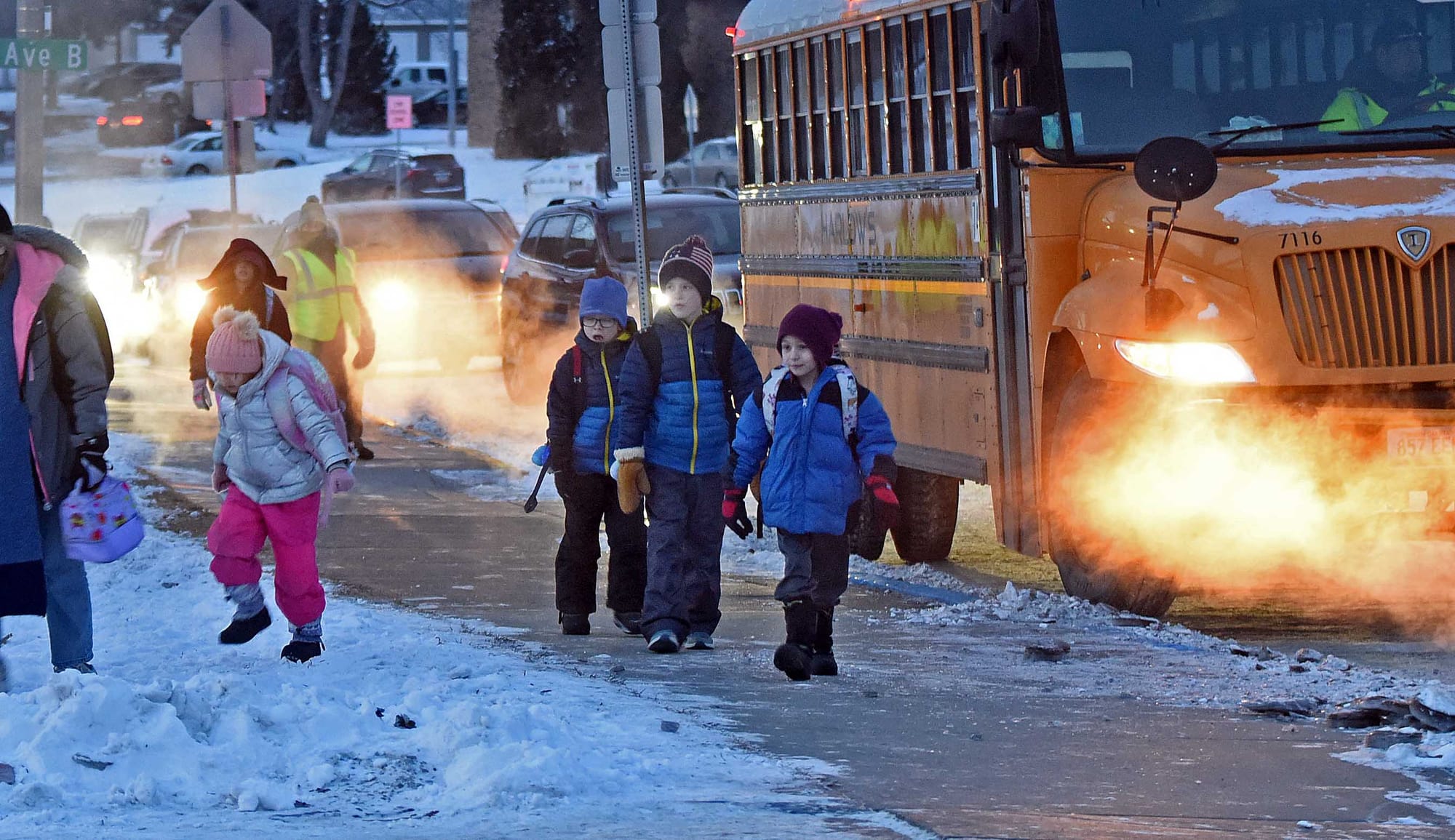
Opponents say later sunrises would present a safety risk for children waiting for buses and walking to school in darkness and also disrupt circadian rhythms that regulate sleep, hormones and other biological functions.
“It’s actually the worst of all situations,” said Dr. Seema Khosla, medical director of the North Dakota Center for Sleep in Fargo.
“It’s a big deal, especially for adolescent mental health,” Khosla said.
The Sunshine Protection Act, which would make daylight saving time permanent year-round, passed the U.S. House on July 14 and is awaiting Senate consideration.
The act has largely been pushed by politicians and lobbyists from the U.S. South, particularly Florida, where variations in daylight throughout the year are less extreme than in states across the northern part of the country.
In North Dakota, daylight saving time is about 1 hour 40 minutes ahead of solar time, while standard time is about 40 minutes ahead and more closely aligns with the sun's natural cycle. That is why major sleep medicine organizations favor permanent standard time.
Khosla said permanent daylight saving time would erase much of the benefit gained from delaying middle and high school start times. Both the American Academy of Sleep Medicine and the American Academy of Pediatrics recommend school start times no earlier than 8:30 a.m.
"In one fell swoop, by going to daylight saving, we lose all of that benefit," she said.
Dr. Karin Johnson, a sleep medicine specialist and neurologist at the University of Massachusetts and co-director of the group Save Standard Time, said North Dakota is “about the worst of anywhere” in the U.S.
North Dakota's location on the western edge of the Central Time Zone, combined with its northern latitude, would make it one of the states most affected by permanent daylight saving time, Johnson said.
“The more misaligned you are, the exponentially worse it is for your body and your health,” Johnson said.
For many, though, the potential changes boil down to protecting student safety first and foremost.
“The things that concern me are getting to and from school,” said Jeff Fastnacht, superintendent for Bismarck Public Schools.
Fastnacht said school starting times were already adjusted back by 10 minutes for the coming fall after changes due to busing challenges last year to gain a little morning daylight.
“This is kind of counterintuitive to the work we were doing with transportation and bell times, and my concern is student safety,” he said.
Fastnacht said parents and communities will likely need to implement additional lighting and safety measures if the federal measure is approved.
Dr. Arveity Setty of the CHI St. Alexius Health Sleep Medicine Clinic in Bismarck said impacts could be greatest in adolescents and teens.
They would wake in darkness, go to school in darkness, and not see natural daylight until later in the day.
“This is helping their misalignment more toward an abnormal circadian rhythm,” Setty said. “They will be more tired and that affects schooling for sure.”
Setty said each spring he sees many students who struggle adjusting after clocks move forward.
“Now, if it is permanent daylight saving time, then they are in more trouble,” Setty said. “We will probably see much more than what we are already seeing right now.”
For adults, chronic sleep deprivation and circadian misalignment could lead to more metabolic, cardiovascular and obesity problems, he said.
During the 2025 legislative session, lawmakers debated permanent standard and daylight saving time but ultimately rejected both approaches, in part because of concerns about North Dakota operating on a different clock than neighboring states.
Russ Hanson, executive vice president of Associated General Contractors of North Dakota, said local noise ordinances already limit early construction starts during summer mornings, making permanent standard time more difficult for contractors.
“I would see this (move to daylight saving time) for our contractors as less problematic because it's a nationwide standard and it does not go the other way to eliminate it,” Hanson said.
Cole Higlin, policy chair of the North Dakota Recreation & Park Association (NDRPA), had also opposed the state move to permanent standard time because of impacts on after-school activities and sports in the spring and the fall.
“If we were ultimately having to pick one, I think obviously daylight saving is more important to our park districts across the state of North Dakota having that later spring, summer, fall daylight,” Higlin said.
In 1974, the U.S. extended daylight saving time through the winter during the Arab oil embargo, hoping to cut energy use.
The late sunrise times in northern states eventually led to pushback and ultimately repeal.
“It had a lot of support initially, but they had to stop it because there were so many unanticipated consequences,” Khosla said.
Support rural news by donating now.
Because we don't receive network funding, our independent journalism relies on supporters like you.
Donate to NDNCThe North Dakota News Cooperative is a nonprofit news organization providing reliable and independent reporting on issues and events that impact the lives of North Dakotans. The organization increases the public’s access to quality journalism and advances news literacy across the state.
Have a story idea? Send tips to michael@newscoopnd.org. Connect with us on X or Facebook.