Project to position Minot as significant cog in U.S. steel supply chain
Up to 4,000 construction, 650 professional positions for north-central region
Northeastern Minnesota’s iron ore deposits once fueled efforts to outproduce adversaries during WWII.
One native son now aims to use the surface iron ore left over from a century of mining to restart a supply chain as the U.S. attempts to revive domestic manufacturing, with Minot as the focal point.
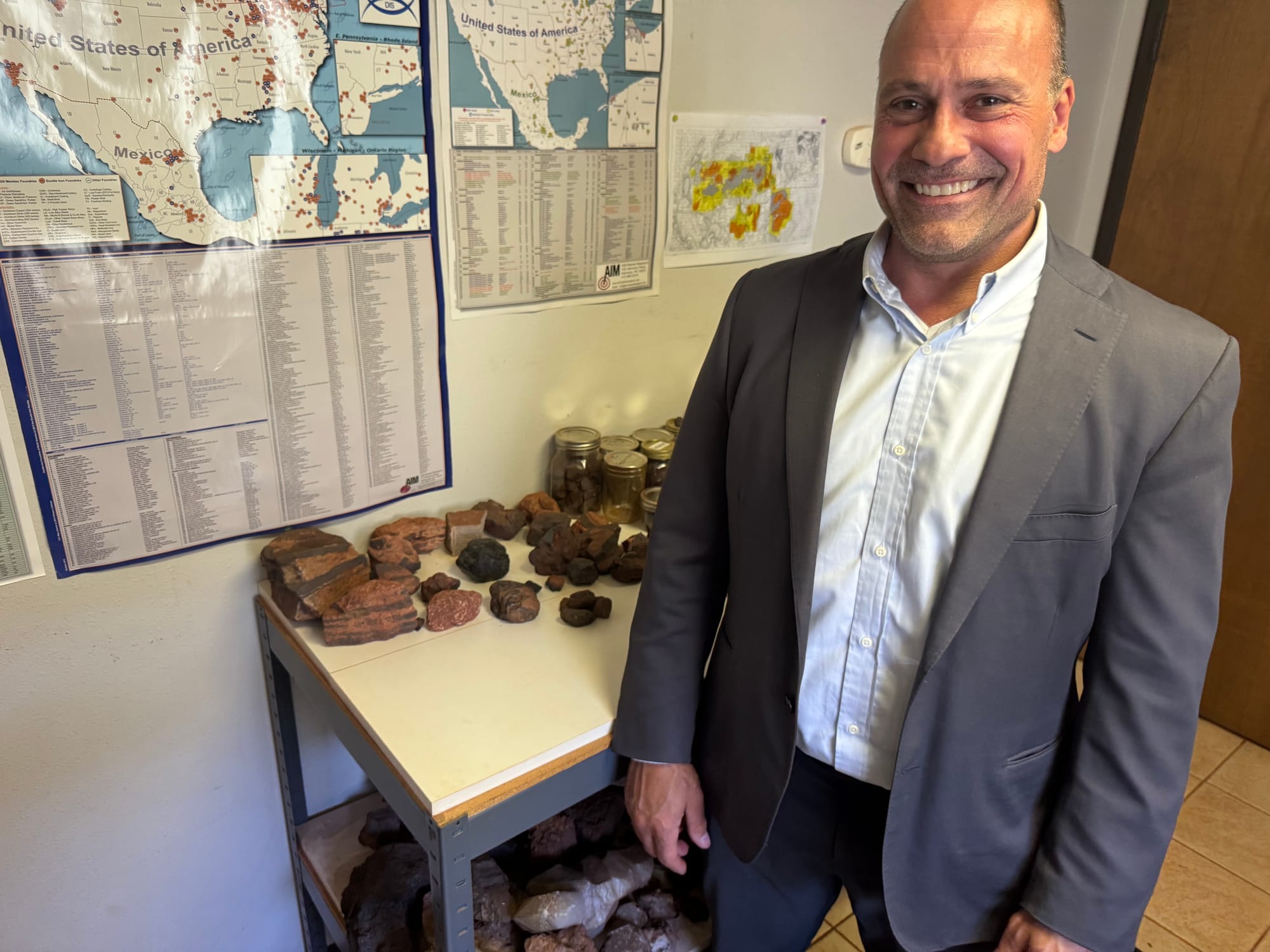
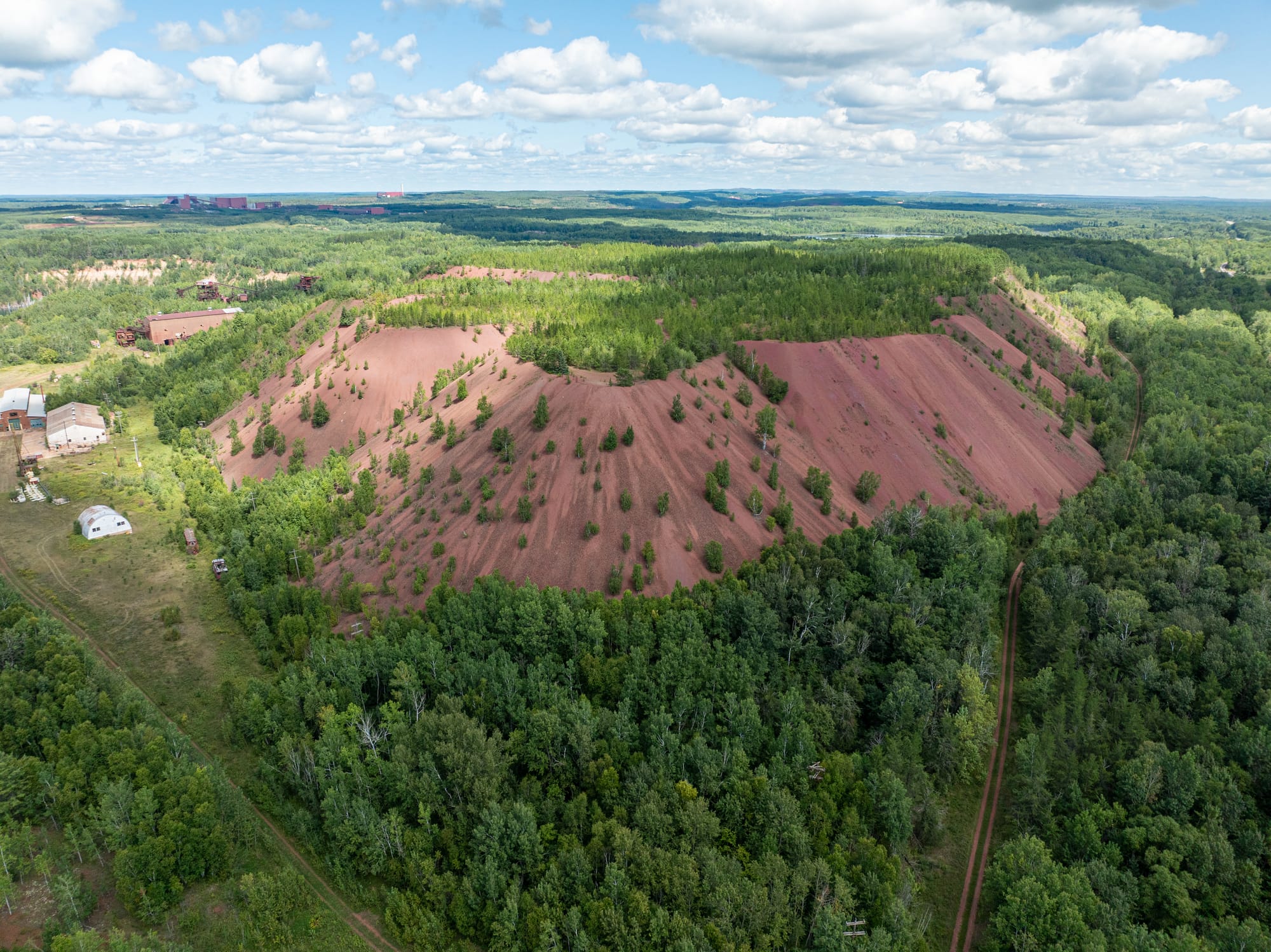
Around 3 billion tons of discarded iron ore are piled high into ridges of rusty rock stretching across the 110 miles of the Iron Range, said Jim Bougalis, CEO of North American Iron, who initiated the project.
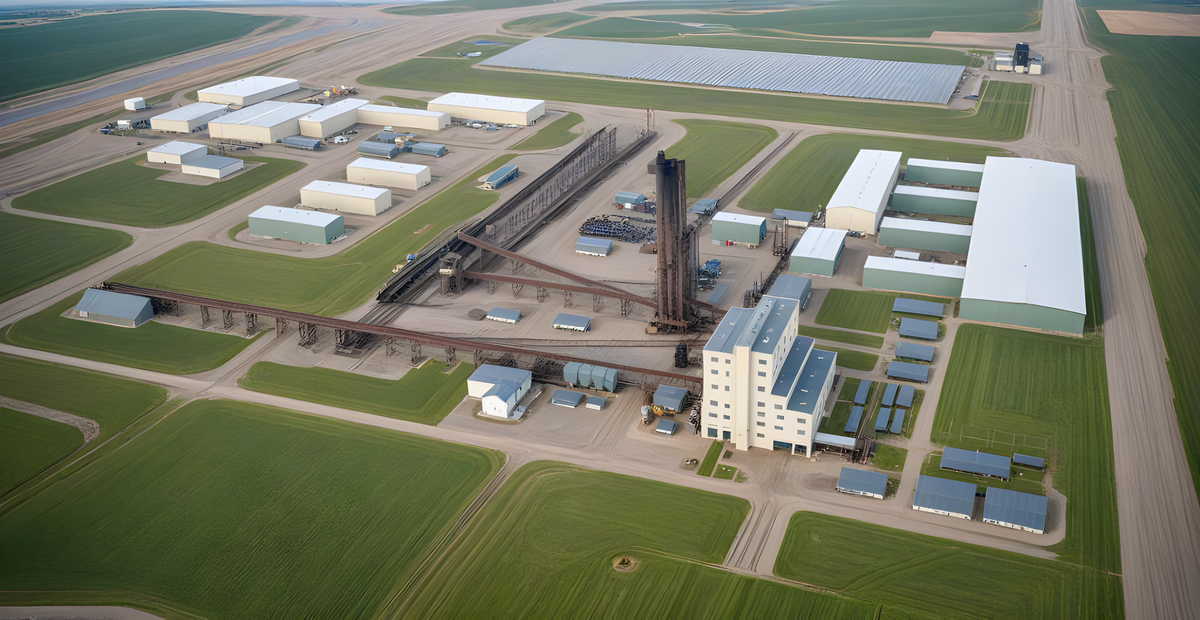
Between 4 to 5 million tons of that reclaimed iron ore will be sent from Calumet, Minnesota by rail to Minot each year, where it will be transformed into pig iron - a feedstock of making steel - at a facility on the northeastern side of the city projected for completion in 2029.
The Minot end of the link will support 650 long-term, professional positions at the iron processing facility and the adjoining 300-megawatt power plant on 700 acres of a 2,400-acre plot, according to Bougalis.
Between 3,000 and 4,000 construction jobs are likely during the building phase, he said.
The company will actively recruit from the local area, as well as nationally and internationally, representatives said, with many of those positions being six-figure engineering jobs in what is expected to be a highly automated facility.
Opportunities exist to work with local universities and colleges as well, said Bougalis, who sees possibilities of establishing curriculum at Bismarck State College, for example.
Mark Lyman, economic development specialist at the Minot Area Chamber EDC, said opportunities exist for steering those hundreds leaving duty at Minot Air Force Base each year into a project like this as well.
North American Iron has also begun speaking with developers in Minot to ensure housing stock expansion is viable to match recruiting efforts.
“Between this project and other major projects in the Minot area, we’d love for more people to build more homes, but I don’t think we’re in some kind of housing crunch that’s unsolvable, even with a couple thousand employees,” Lyman said.
Currently there’s about a 5% vacancy rate for apartments in Minot, Lyman said, and two new apartment complexes are being completed, as are around 60 to 80 new single-family homes, he said.
Once running, the North American Iron facility would be the first U.S. domestic pig iron producer in decades and could help replace pig iron sources disrupted by tariffs and geopolitical turmoil that U.S. steel plants need, said Bougalis.
Construction is expected to start in 2027, he said, and once full production is going, around 2 million tons of pig iron could be produced each year.
“We've been positioning this for over a decade, for projects of this exact type and size, so we feel like this is really a strong, economically transformative project for the city,” Lyman said.
A total of $3 million in grants was awarded to the project from the North Dakota Development Fund by the state’s Commerce Department, along with another $7 million in grants from the Industrial Commission’s Clean Sustainable Energy Authority, in 2024.
A study conducted for the project estimates around $3.4 billion in economic output in North Dakota, and $75 million in local, state and federal government revenue. Annually, that amounts to around $690 million in output and around 1,400 jobs created in the state besides the 650 direct hires.
In addition, around 400,000 tons of aggregate rock will be produced each year, which can be sold and used for roads and other construction needs in North Dakota.
Studies are being conducted with the Energy & Environmental Research Center (EERC) at the University of North Dakota determine whether some of the waste material can be used in fertilizer on iron-depleted fields in the state.
Minot was chosen because of the rail link between the areas, access to stranded natural gas resources, favorable tax and regulatory policies, and the ability of the company to sequester carbon dioxide emissions onsite, Bougalis said.
Through hydrogen processing and sequestering carbon, the company said the project will have 60% fewer emissions than a comparable facility.
The company assures there will be minimal dust from the site as raw iron ore awaiting processing will be sprayed with a coating that keeps material from blowing away.
While Bougalis said he’s been thinking for years about how to use the discarded iron ore, 2017 investigations into steel imports that led to a 25% tariff on most steel imports really accelerated the planning.
Disruptions in supply due to the fact that 60% of imported pig iron was coming from Russia and Ukraine at the time the conflict there started in 2022 gave the project an additional push, he said.
Currently, around 100% of pig iron is imported, and 75% of the roughly 20 million tons imported annually comes from Brazil, he said.
“What makes it sad is that in Minnesota we have enough iron ore to feed the country for centuries, yet we're buying it all from all these other places, and that's really the core of what we're doing and why we're doing it,” Bougalis said of the project.
During the mining heyday of WWII, ore was dug from pits and trucked or railed out, then smelted in plants across the Midwest into steel that eventually made its way into ships, tanks, planes and artillery supporting the Allied war effort.
The highest purity ores were chosen because there was just so much of it and it was more efficient to mine and smelt during that time and stretching into the 70s, Bougalis said.
That left a few billion tons of lower-grade taconite ore that wasn’t efficient or economical to process at the time but is now through processes developed worldwide in areas where ore was often mixed.
Local knowledge of those processes disappeared, said project manager Johann Grobler, but survived elsewhere.
“Now it’s come back, but now it is much more refined, advanced, and works much better,” Grobler said. “So let us use it again, it’s most definitely worth it.”
Virgin iron not reprocessed from scrap iron, which is a major source for producing U.S. steel, is needed most for the highest-quality steel - think warheads, submarines, specialty alloys used in aerospace.
“That is such a rarity in this world,” Bougalis said of pure pig iron. “We’d be the only source in the U.S.”
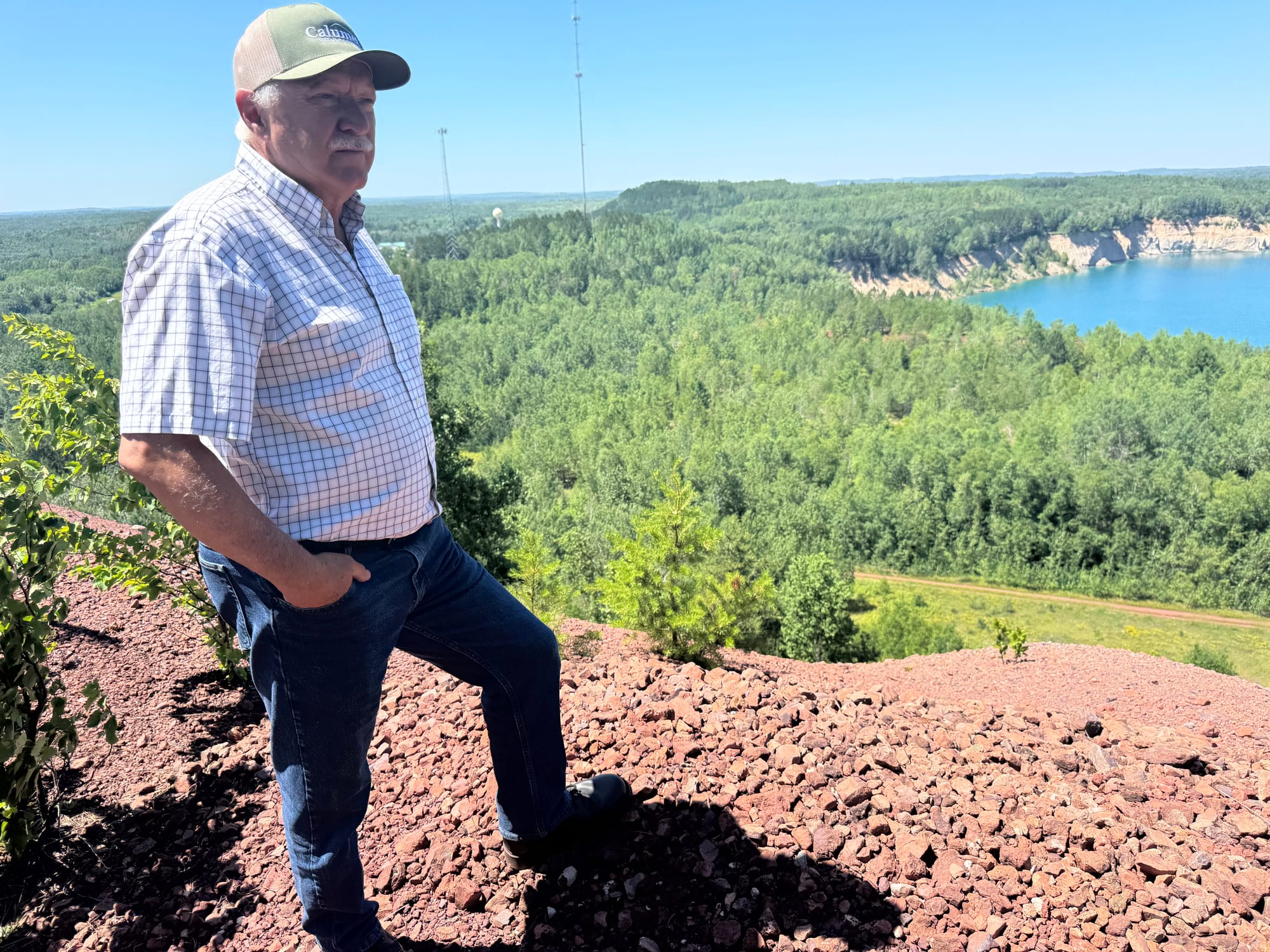
Back in Minnesota, the rusty rock is piled so high it is sometimes mistaken for mountains by visitors unversed in the area’s history, Bougalis jokes.
For Bougalis, bringing jobs back to the area he hails from and across the Upper Midwest is no laughing matter.
He saw in his youth how when mining petered out, communities nearby dwindled. His hometown of Hibbing declined from around 21,000 residents in 1980 to around 15,000 today. The poverty rate there hovers around 16-18%, nearly double the state average.
“That’s one of the main reasons I started this,” Bougalis said. “I see my community dwindling and see we’re surrounded by so much wealth. It’s really sad that we have all this wealth here and we’ve been denying it.”
Increasingly restrictive regulations over the years in Minnesota have made starting new mining projects drawn out and difficult, he said, but by tapping into discarded surface ore has allowed the company to go through a smoother permitting process.
Support rural news by donating now.
Because we don't receive network funding, our independent journalism relies on supporters like you.
Donate to NDNCThe North Dakota News Cooperative is a nonprofit news organization providing reliable and independent reporting on issues and events that impact the lives of North Dakotans. The organization increases the public’s access to quality journalism and advances news literacy across the state.
Have a story idea? Send tips to michael@newscoopnd.org. Connect with us on X or Facebook.