North Dakota childhood vaccination rates continue slide
Health officials urge parents to speak with trusted healthcare practitioners on vaccinations
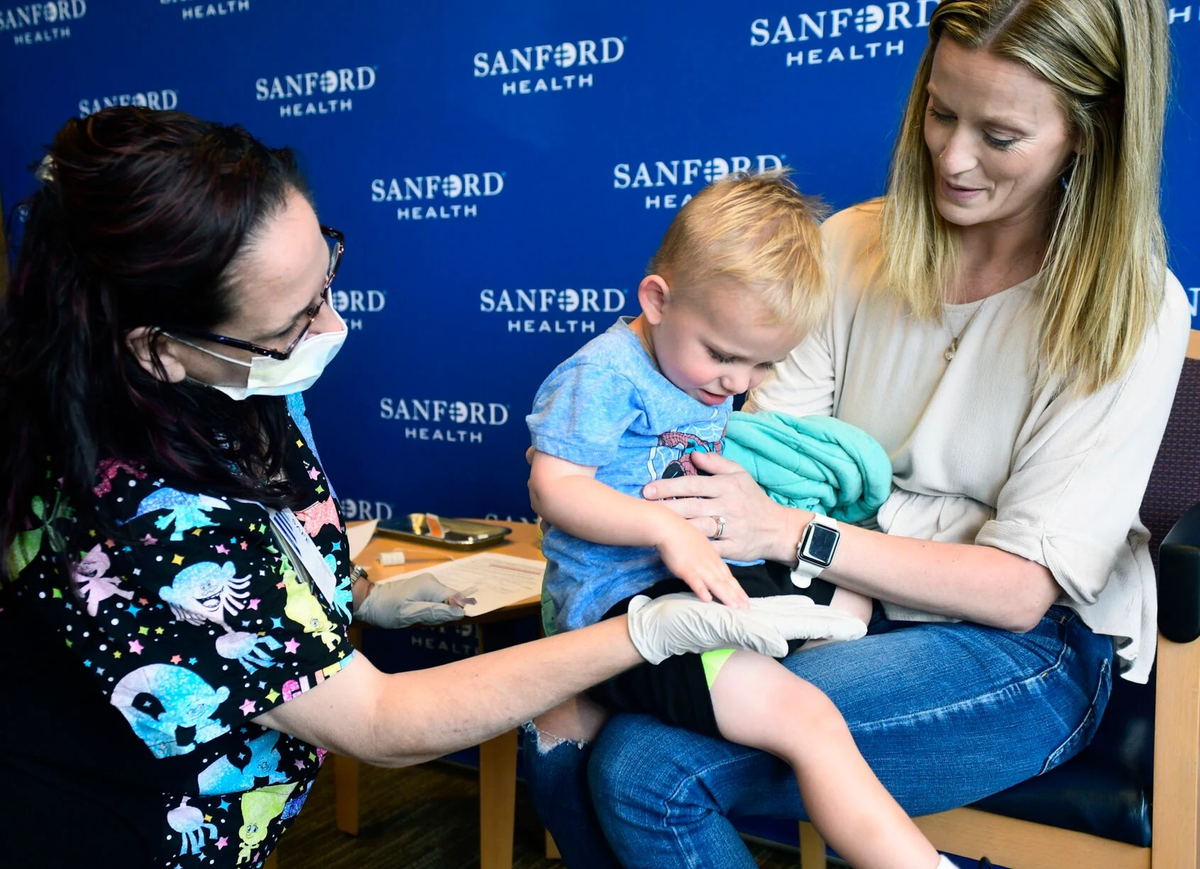
Infant vaccination rates for measles in North Dakota continue to drop amid conflicting information and muddled guidance from federal health authorities.
Measles cases currently stand at over 4,500 nationally, double the number recorded last year.
The infant MMR vaccination rate for measles, mumps and rubella is currently at 76.09% in North Dakota.
That’s a drop from the high levels of 94.75% seen in 2019, prior to the COVID-19 outbreak and the ensuing rise in vaccine skepticism.
“It’s a trend we're seeing nationally with decreases in vaccination rates and increases in nonmedical exemptions, particularly for school age children, which is obviously a concern,” said Mary Woinarowicz, North Dakota Health and Human Services Immunization Director.
“Particularly for measles, because it is such an infectious disease,” she said. “It does spread so easily.”
Having a rate at or close to 95% provides for “herd immunity,” according to healthcare providers, and numbers below that create stronger conditions for community spread.
The significant decline in measles vaccination rates is something health officials across the state are worried about, said Kylie Hall, director of North Dakota State University’s Department of Public Health Center for Immunization Research and Education (CIRE).
Scattered measles cases in North Dakota will “likely be the norm” as long as vaccination rates continue to slide here, nationally, and internationally, Hall said.
“What I think you're going to see is when a case of measles enters a highly vaccinated community, it's going to be very contained,” Hall said. “Where you're going to see dozens of cases is when it enters a community of low vaccination, and then it's able to spread rapidly in that community.”
Generally, measles vaccination rates are higher in the eastern half of North Dakota and lower in the western half, according to the state’s infant immunization dashboard.
Before reemerging in 2025, no measles cases were reported in North Dakota since 2011.
Since 2025, a total of 74 cases have been recorded in the state, with the last occurring in May 2026.
Angie Seidel, Health Services Coordinator at Bismarck-Burleigh Public Health, said when recent measles outbreaks started she saw an uptick in parents calling to see if their children were up to date on vaccines or how to get them.
“One thing we were happy to see is parents who were vaccine hesitant and did not have their children vaccinated against anything, come in and get that MMR vaccine just to have their kiddos protected,” Seidel said.
“I think a big factor of that is the disease itself, how scary it is, and then also that they will be excluded from school if they do not get that vaccine,” she said.
Woinarowicz said North Dakota was fortunate that most measles cases that have occurred in the state, particularly in 2026, have been in counties with already higher vaccination rates.
“This helped limit the spread of the disease,” said Woinarowicz.
State health recommendations for MMR are one dose at 12-15 months, followed by a second dose at between 4 and 6 years of age.
Woinarowicz said health officials continue to stress education about getting the measles vaccination.
“It is severe. It does spread easily. It does cause severe illness,” she said, noting several cases of hospitalization among the recent spread in the state.
Rates of all recommended infant vaccinations have dropped in North Dakota since 2019. Vaccination for hepatitis B was the highest, at 79.04%, and the lowest for hepatitis A, at 55.55%.
The drop in vaccinations also comes as nonmedical exemptions due to moral or philosophical reasons have increased, from below 1% to now near 2% for those officially opting out.
Poll data released on Oct. 20 from KFF, a healthcare information provider, found that supporters of the Make America Healthy Again (MAHA) movement, which often espouses vaccine skepticism, expressed relative confidence in several vaccines administered to children.
Around 76% of self-identified MAHA adherents trusted MMR and polio vaccines, while around half trusted hepatitis B and flu vaccines.
High-level confusion
Those decreases come as several recent federal infant vaccination recommendations remain unresolved.
Hall said there hasn’t been a consistent message from the federal government about how to stop measles outbreaks.
“That’s what we’re missing,” Hall said. “(The vaccine) is safe and it’s effective at preventing measles.”
A March federal court order suspended new guidance the CDC had issued for infant and adolescent vaccinations for 2026.
Meanwhile, an executive order from the Trump administration issued in August trimmed the recommended vaccinations for infants and adolescents down to 11. The order moved other vaccinations for infants and adolescents to categories of high-risk, or to a category of individual choice based on consultation with healthcare providers.
“I think in the absence of some of that messaging, it just leads people to be confused about what is recommended, why it is recommended, and when should my kid be getting it,” Hall said.
Woinarowicz said, anecdotally, she’s been hearing from providers having conversations with parents that some of the conflicting communication at the national level is making it difficult for parents to understand what the right vaccine schedule to follow is.
“Healthcare providers are the most trusted source of information for parents, and we want our providers to have reliable information to be able to have those conversations and answer those questions,” she said.
Respiratory vaccinations also lag
While it is still early in the fall respiratory virus season, rates for flu vaccinations stand at 15.3%, which is on par for the past couple of years at this time, health officials said, but below pre-COVID levels.
“Any time we see immunization rates decline, it is a concern because fewer people being vaccinated means there is a potential for an increase in cases,” Woinarowicz said.
“Vaccines are one of the best ways to stay protected against respiratory illnesses, and it may not prevent disease completely, but it will prevent severe disease, hospitalization, and the need to seek medical care for things like influenza, COVID, or RSV,” she said.
Woinarowicz said last year was one of the first with significant declines in people over 65 getting respiratory vaccinations in North Dakota, which was a particular concern because of the higher risks for severe illness with that population.
Seidel said she’d seen the opposite, at least in the Bismarck-Mandan region so far this year.
“So one population who is very eager to get the vaccines is our older population, so our 65 and older,” Seidel said. “Our clinics are actually really full right now.”
Another rising concern is infant vaccinations against influenza.
The state saw four pediatric deaths from influenza last year, the first deaths for infants with flu in the past decade, Woinarowicz said.
Health officials urge people to talk to their healthcare providers directly about what vaccines they or their family members need.
“I feel like patients respect that provider input, and if your provider is directly talking to you about it and talking about the importance of the vaccine, people are more apt to receive it or even to consider it,” Seidel said.
Support Independent Journalism
Your donation to the North Dakota News Cooperative puts our communities first by delivering in-depth reporting on the issues that matter most.
Donate to NDNCThe North Dakota News Cooperative is a nonprofit news organization providing reliable and independent reporting on issues and events that impact the lives of North Dakotans. The organization increases the public’s access to quality journalism and advances news literacy across the state.
Have a story idea? Send tips to michael@newscoopnd.org. Connect with us on X or Facebook.