Minnesota immigration crackdowns loom large for some North Dakotans
Faith groups preparing messaging, mutual aid assistance groups, rallies in response
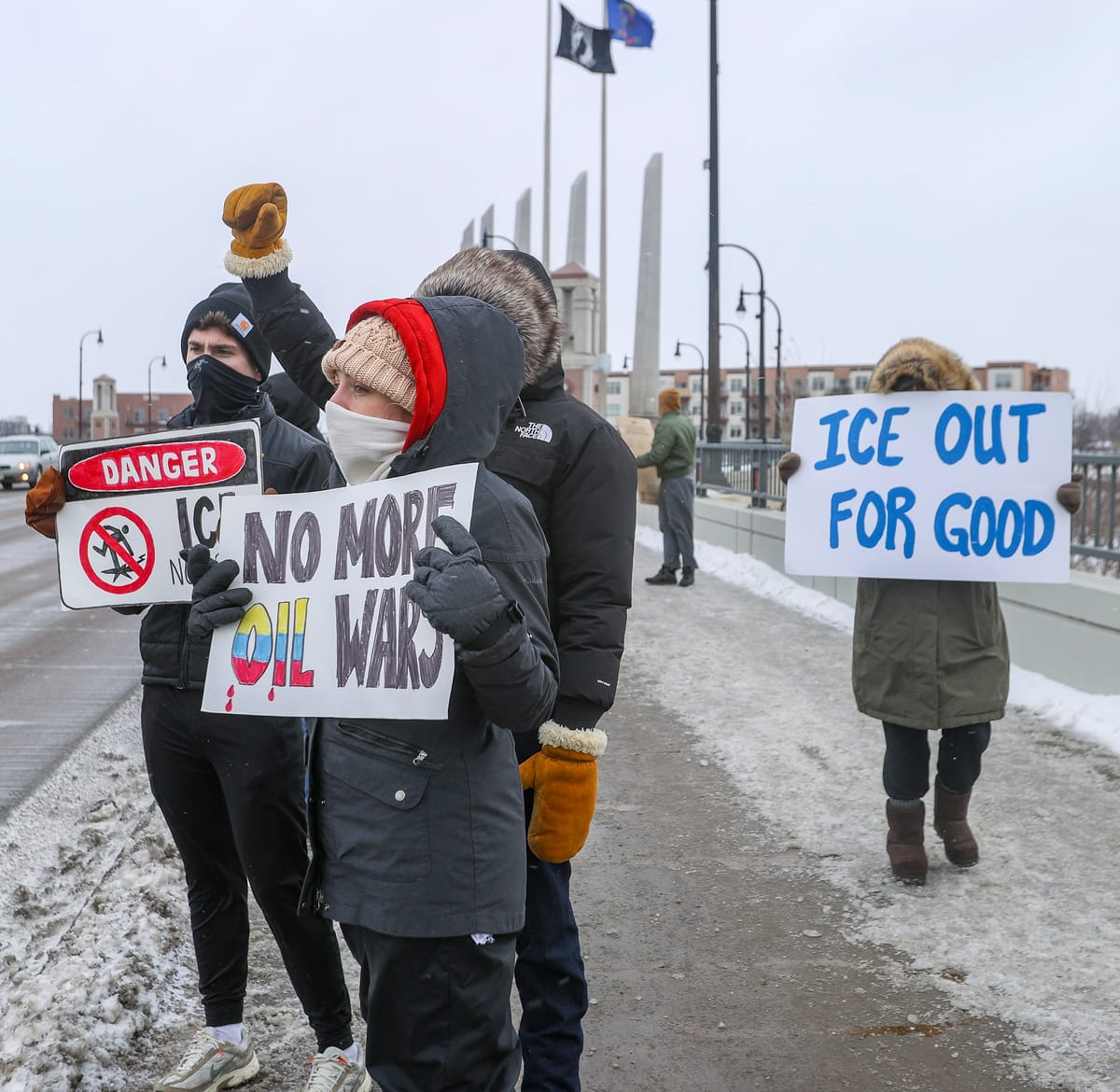
An emphasis on Christian teachings of “welcoming the stranger” is taking the lead in a growing campaign among some faith groups in North Dakota.
They hope their message of embracing and providing neighborly assistance to legal immigrants in the region can help staunch some of the fear and uncertainty within those communities.
Those fears have been stoked by the forceful U.S. Immigration and Customs Enforcement (ICE) actions in neighboring Minnesota in recent weeks, where both legal and undocumented immigrants have been targeted.
Approximately 2,000 to 3,000 federal agents, including ICE and Customs and Border Protection (CBP) personnel, have been part of a major enforcement action dubbed “Operation Metro Surge” in the Twin Cities leading to around 3,300 arrests since November.
Faith leaders expect the enforcement action to spread further to western Minnesota and potentially into North Dakota, they said.
Many are concerned that the actions have become indiscriminate, with agents targeting not only undocumented migrants, but also those with legal immigration status or valid visas, as well as U.S. citizens and some Native American tribal citizens.
Armed and masked agents have stopped residents demanding proof of citizenship, and appeared at churches, mosques, daycares and schools.
All of this has led to growing fear and concern within those communities, they said.
“I just want people who are scared right now to know they are not alone,” said Carrie Lauber, a Presbyterian elder in the Fargo-Moorhead area. “I want people who are so fearful to know that there are people out there who are trying their best to do what we can do, and that we are fighting for them.”
The loose coalition of pastors, priests and other faith leaders has been actively holding meetings, engaging in training and seminars, as well as planning for what they hope are large rallies during the upcoming Lenten season.
The main one is “Palm Sunday Path” to be held from 3 p.m. to 5 p.m. on Sunday, Mar. 29 on the Capitol Grounds in Bismarck.
Ross Keys, chair of the North Dakota Human Rights Coalition, said the three pillars of the Palm Sunday event are “healing the sick, feeding the hungry, and welcoming the stranger,” and that events will be held across the Midwest. Faith groups in Iowa, Wisconsin, Minnesota, Michigan and Nebraska are also organizing their own rallies.
Currently, only the Bismarck event is officially set for North Dakota, but a Fargo-Moorhead one will also likely be held, he said.
“I think a lot of people are concerned,” said Sylvia Bull, associate pastor at Faith Lutheran Church in Bismarck. “Many people in North Dakota have close ties to Minnesota, so I think a lot of people have a more personal connection to this than maybe some of the other things happening in the news.”
Bull, and other faith leaders, hope those who also believe in their message of “welcoming the stranger” can join together. They say that people should raise the issue if they are not hearing discussion about it in their own congregations across the state.
Bull said it can be hard for clergy to know what their congregations think about something if they don’t bring it to their attention.
“Having people say that this is something we care about right now and that this is something we want to work on together, that can be really helpful in providing direction,” Bull said.
Jamie Norstog, pastor at Moorhead Presbyterian Church, said that his parishioners from both sides of the border are having conversations about what they can do as a church to ensure everyone in the community feels safe.
The enforcement actions are “definitely causing some uneasiness and fear,” Norstog said, adding that some of those conversations in his congregation are with people who are legal citizens worried they may be targeted too.
“I think speaking out is very important,” Norstog said. “I think that using our voice right now is so important. We encourage people to use their voice and encourage people to check on their neighbors who are immigrants, refugees or people of color who are all being targeted.”
Cynthia Shabb, program director at Global Friends Coalition in Grand Forks, said an increasing number of people are reaching out to her and other groups about how to get food to families who are afraid to leave their homes or help give kids rides to school.
“What we are hearing from our (immigrant) families is that they are very worried,” Shaab said.
Unitarian Universalist Rev. Karen Van Fossan of Fargo said the loose collection of groups is discussing ways people can provide mutual aid to their neighbors if they are concerned about going out, helping with rides and groceries and other daily tasks.
“As people of faith and conviction, we understand that every human being is sacred, and that’s not negotiable,” Van Fossan said. “We believe that the vast majority of people are in solidarity and are actively engaged or searching for ways to be actively engaged.”
Global Refuge North Dakota field director Dan Hannaher said the faith groups and other organizations have become more focused on mutual aid due to the fact that some people are afraid to leave their homes.
Many also say this is starting to impact businesses in the region that have immigrants in their workforce. An increasing number are afraid to go to work or frequent their usual third places, impacting those businesses as well.
“I’m hoping at some point in time the employers will stand up and question what is happening, because the targeting has been so inherently indiscriminate,” Hannaher said.
“The folks we serve came to the U.S. under a legal, approved status of the government, and we hate to see them under threat at all,” he said. “They are valuable parts of the community, providing resources for employers and consumers of products and services provided here.”
The American Civil Liberties Union of North Dakota has developed a family safety guide for families that can be accessed on its website. The guide details their rights and what family and friends can do if they are arrested or deported.

The North Dakota News Cooperative is a nonprofit news organization providing reliable and independent reporting on issues and events that impact the lives of North Dakotans. The organization increases the public’s access to quality journalism and advances news literacy across the state. For more information about NDNC or to make a charitable contribution, please visit newscoopnd.org. Send comments, suggestions or tips to michael@newscoopnd.org. Follow us on Twitter: https://twitter.com/NDNewsCoop.