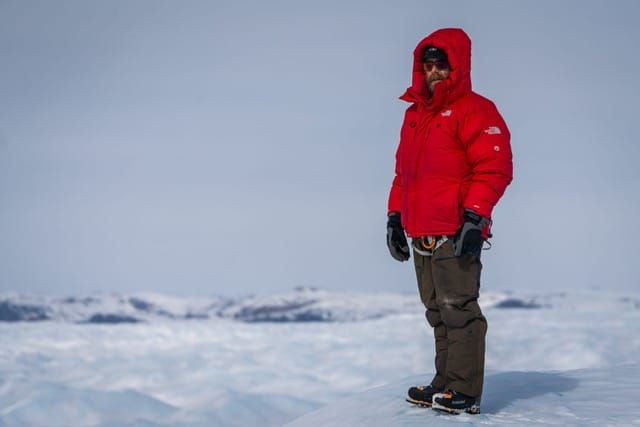
Duo bikes 'Whooper Highway' to document whooping crane's continued plight
Pair passing through North Dakota around June 16
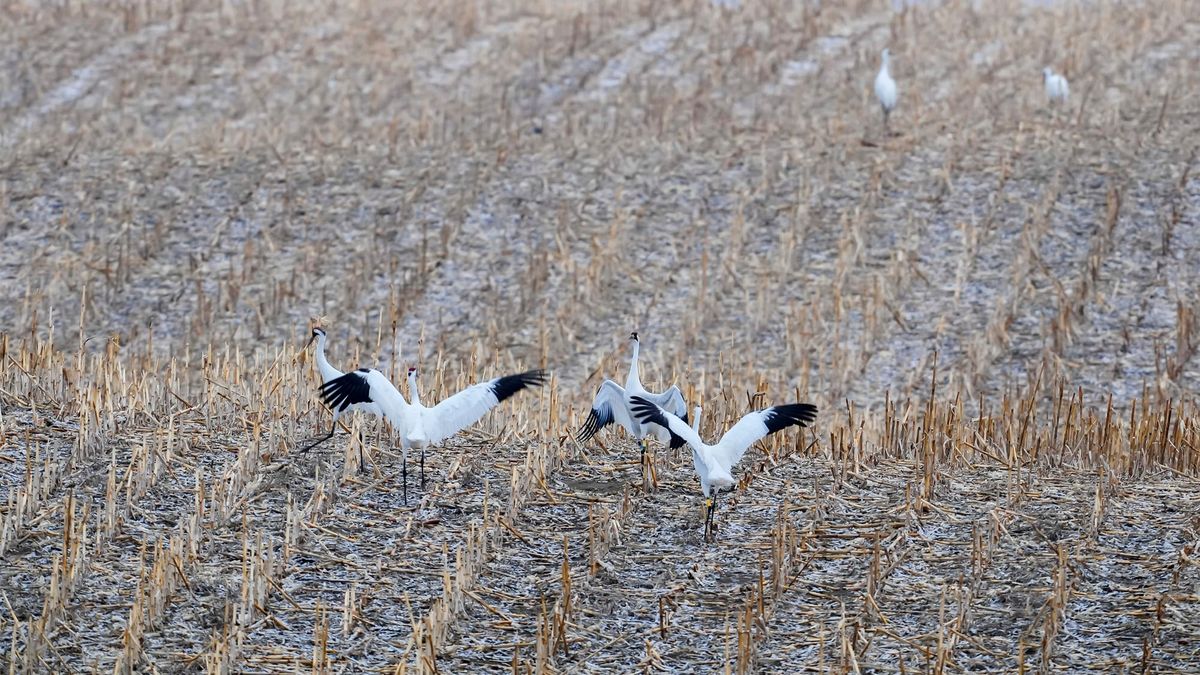
*Note: Caven and Forsberg will arrive in Bismarck on Wednesday, June 17, with a gathering planned at Pioneer Park from 12:30pm to 2:00pm. Snacks, water and lemonade will be available for the general public.
Andy Caven often describes a common reaction to seeing a whooping crane in the wild. For the average person, seeing the rare bird is akin to witnessing a full solar eclipse, he said.
“Once you see one, you definitely want to go see another one, and you’ll work really hard to do it,” said Caven, vice president of the International Crane Foundation.
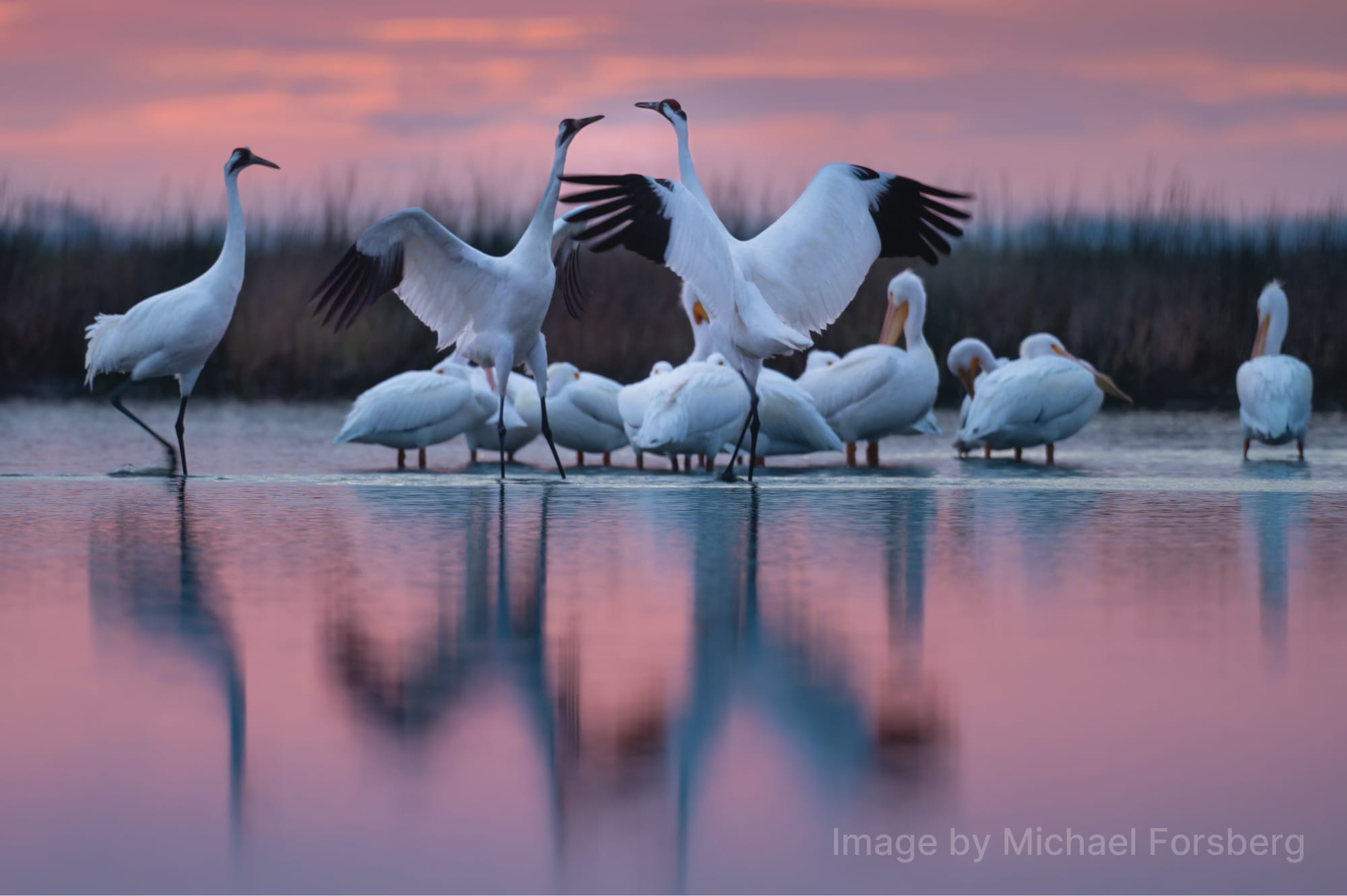
Most people never end up seeing one of these five-foot tall, ghostly-white birds with wingspans like NBA players, the rarest of cranes.
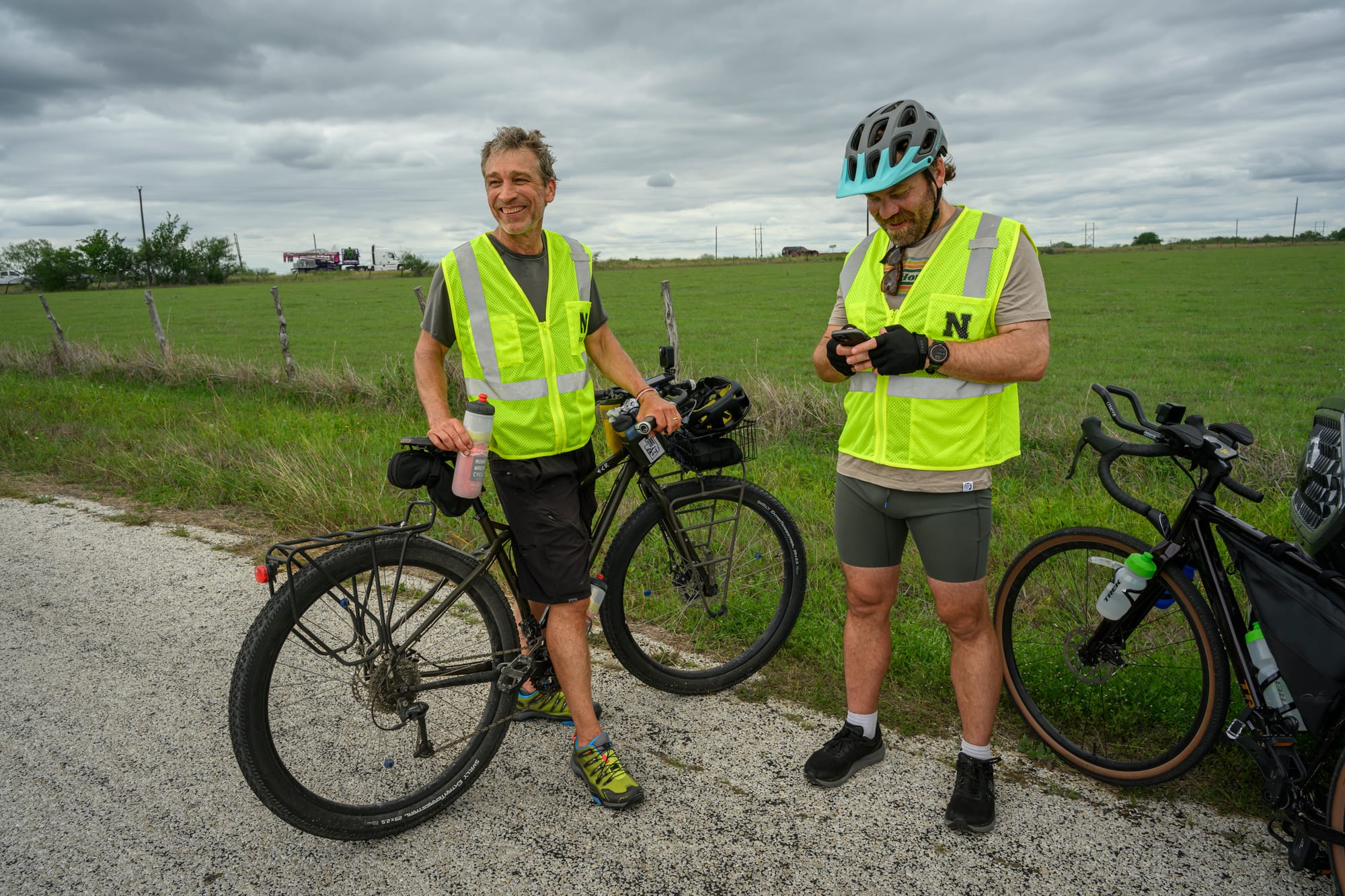
Caven, along with conservation photographer and videographer Mike Forsberg, is currently cycling the 2,500-mile migration corridor from the south to the north, documenting the condition of the habitat along the route and sharing stories of the cranes in visits with locals.
Once abundant across the Great Plains, the whooping crane almost went extinct. In the 1940s, only 15 birds lived in the wild.
The population has rebounded somewhat through conservation programs and attempts to protect wetlands and prairies along the route these birds migrate twice per year from Saskatchewan to Texas.
Forsberg said around 550 from the last self-sustaining migratory flock remain, migrating the corridor twice a year.
It’s something they’ve been doing since the last ice age, around 12,000 years ago.
“That’s pretty cool. And that’s something to take a tremendous amount of pride in,” Forsberg said.
Unregulated hunting, along with habitat loss at the north and southern end of their migration routes and along that corridor, almost did these majestic birds in.
Ensuring habitat continues to be viable in places like North Dakota along the route is important for their continued rebound and survival, they said.
“The wetlands and grasslands along the way for the whooping cranes are like rungs in a migratory ladder, and we’ve lost a lot of habitat,” said Caven, adding that around 70% of the grasslands and 50% of the wetlands have been lost in the Great Plains.
“Part of the story we’re trying to tell is how important those rungs in the ladder are, and what the diversity along the way is like,” Caven said.
Support rural news by donating now.
Because we don't receive network funding, our independent journalism relies on supporters like you.
Donate to NDNCCaven and Forsberg are filming a documentary and chronicling the plants, birds and other wildlife along their route, the quality of the prairie and the grasslands. This will help get a better view of what the cranes and other migratory birds using the corridor witness during their bi-annual sweeps across the country.
“We’re really seeing every inch of the flyway and the condition it is in, so that’s part of the personal and scientific experience,” Caven said. “This flyway is incredibly important to grassland and wetland birds, and it’s at risk.”
Whooping cranes need to get from wetland to wetland to build enough fat reserves as they come north in order to make it to breeding grounds in good enough condition to raise a chick, Caven said.
Forsberg and Caven said the Great Plains is incredibly important as a breadbasket and for energy, but ensuring the viability of adequate wetlands along the route needs to be intentional rather than accidental.
“What’s at stake is not just a bird,” Forsberg said. “It’s our lives and our lifestyles.”
Protection of the birds should be seen as not just what are we protecting them from, but who are we protecting them for, he said.
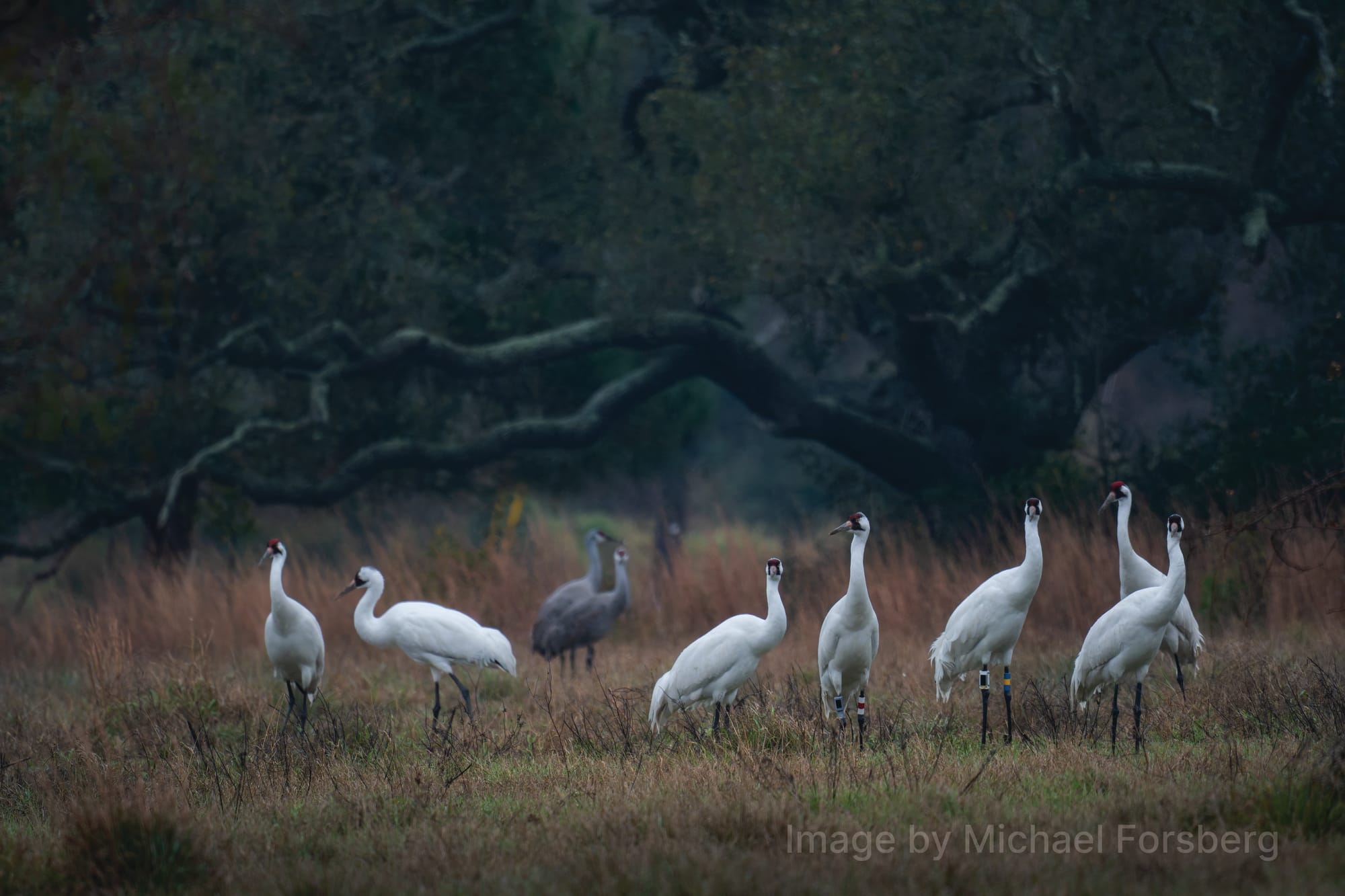
“We’re looking forward into these next generations, and if nobody knows about these birds, how can they care about them,” Forsberg said.
Cranes, as a group, are one of the longest-living birds in the world, Forsberg said. Studies done in the 1970s and 1980s found some whooping cranes live into their 40s.
“It’s pretty remarkable when you think of a 45-year-old bird that’s traveled 2,500 miles twice per year for that many years,” Forsberg said.
Caven said the wildlife refuge system stretching across central North Dakota is extremely important for the birds. While it’s hard to see them, the birds do spend a few weeks in the state in the autumn, though the best time to see them may be in April, he said.
Barry Hartup, a veterinarian who worked as director of conservation medicine at the International Crane Foundation until retiring in 2023, may join the bikers on part of their journey through North Dakota.
“I think this (journey) provides them a really neat perspective in what they’re trying to communicate, sort of witnessing what the birds see,” Hartup, who has been involved in tracking whooping cranes for nearly three decades.
“It’s a pretty unique way to say what’s going on on the ground, what’s the landscape like, what are the stresses on the system, what can we plan for the future, and what was it we really didn’t know about,” Hartup said.
Caven and Forsberg said they’ve had several others join in parts of the pedal between Texas and Nebraska, where they were reached by phone for this interview. They welcome others to learn more about the birds and their habitat along the way.
The North Dakota Natural Resources Trust, Meadowlark Initiative and Audubon Society plan to host an event in Bismarck on or around June 16 so they can share the story of their journey.
For updates on the progress of Caven and Forsburg, as well as when and where the event will be held, readers can visit whoopingcranechronicles.com/bike
The North Dakota News Cooperative is a nonprofit news organization providing reliable and independent reporting on issues and events that impact the lives of North Dakotans. The organization increases the public’s access to quality journalism and advances news literacy across the state.
Have a story idea? Send tips to michael@newscoopnd.org. Connect with us on X or Facebook.
Support rural news by donating now.
Because we don't receive network funding, our independent journalism relies on supporters like you.
Donate to NDNC